


What kind of needle is used for a nerve block?
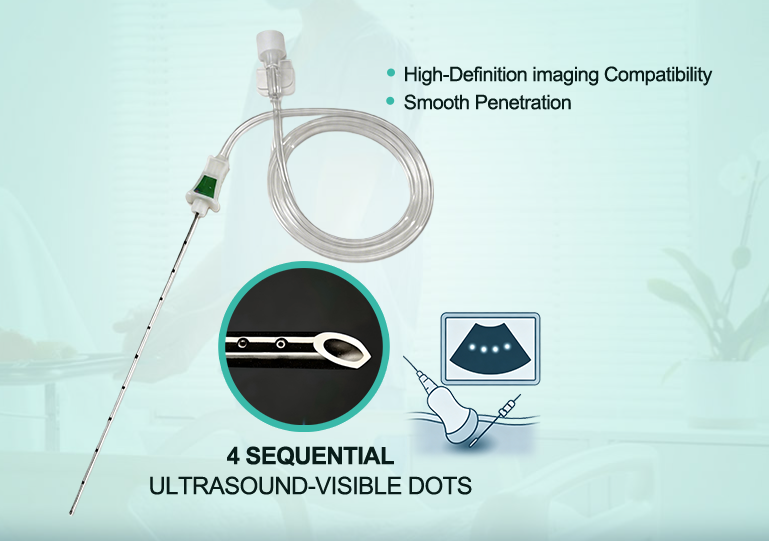
Choosing the right Puncture Needle keeps patients safe during peripheral nerve block procedures. You must use special short-bevel or blunt-tip needles to prevent bad nerve damage. These tools are usually 18G to 27G thick and 25mm to 150mm long. Doctors often pick a 22-gauge insulated needle for single-shot nerve blocks. Shallow spots like an ankle block need 25G needles that are 25mm to 50mm long. You can pick high-tech echogenic needles so they show up clearly on ultrasounds. Non-cutting bevels lower tissue damage as you push them in. Continuous catheter delivery systems like Touhy needles give long-lasting pain relief. Every special Puncture Needle design helps doctors hit the right spot and keeps patients comfortable.
Key Takeaways
Short-bevel and blunt-tip needles push nerve fibers away safely rather than cutting through them.
Doctors choose 22-gauge insulated needles for most single-shot nerve blocks to balance control and patient comfort.
Echogenic needles bounce back ultrasound waves to display exact needle tips on display screens.
Monitors must keep the push force under 15 psi to stop harmful nerve damage.
Types of Puncture Needles for Nerve Blocks
Blunt-Tip and Short-Bevel Designs
You must select the proper Puncture Needle shape to protect fragile nerve structures during regional anesthesia. Standard long-bevel needles cut sharply through tissue layers. You risk cutting nerve bundles when you push long-bevel tips into nerve sheaths. Instead, you can choose short-bevel needles or double back-bevel tips. These special tips gently split tissue fibers. They push anatomical parts away rather than slicing them.
You can compare how different needle tip designs impact procedure outcomes below:
Tuohy (blunt-tip) needles: You should avoid 18-gauge Tuohy needles for certain single-shot blocks. Research shows a 57% success rate for supraclavicular blocks due to their large size.
Long-bevel needles: You must avoid long-bevel needles to prevent accidental intraneural injection and nerve injury.
Short-bevel needles: You should select 20-gauge short-bevel needles to reach higher success rates during surgical blocks. They keep things safe while improving placement accuracy.
Echogenic and Touhy Needles
You can improve needle control under ultrasound guidance by choosing echogenic designs. Specialized echogenic needles feature 360° visibility technology. For example, the ShineArk AN-N/AN-M Series uses a 4x4 array micro-reflective structure. Laser-cut surfaces direct sound waves straight back to your transducer. You keep high-contrast tip tracking on your monitor no matter your entry angle.
Advantage Category | 360° Laser-Etched Echogenic Needles | Standard Echogenic/Smooth Needles |
|---|---|---|
Visibility at Steep Angles | You see clear sound signals at any entry angle. | Sound signals scatter away at steep angles. |
Visibility During Rotation | You maintain constant real-time visibility during rotation. | Dark dead zones create signal loss during rotation. |
Surface Technology | Continuous laser-engraved micro-structures reflect sound evenly. | Older designs rely on plastic coatings or metal dents. |
Procedural Outcome | You safely guide tips past delicate nerve fibers. | Signal loss compromises precise placement. |
The Puncture Needle shaft uses medical-grade 304 stainless steel for ideal flex. You also gain a 500mm flexible TPU extension tube to give anesthetic fluid safely.
Puncture Needle Selection by Depth and Location
Gauge and Length for Superficial Blocks
Doctors pick needle sizes by checking how deep the target nerve sits inside your body. Shallow blocks at your wrist, ankle, or neck area need short entry steps. Medical staff choose smaller needles from 22G to 27G that measure 25mm to 50mm long. Narrower needle shafts hurt less and reduce skin pain during insertion.
Ankle nerve blocks for saphenous or sural nerves need a 1.5-inch needle with a 22G to 25G size. Ultrasound tools direct these easy steps using clear visual images. Neck block jobs also depend on using exact needle thicknesses.
Block Type | Needle Gauge | Needle Length & Type | Purpose & Injection Details |
|---|---|---|---|
Active Interscalene Brachial Plexus Block | 22 G | 5 cm, insulated | To give 20 mL of 0.5% ropivacaine medicine for a helpful nerve block. |
Sham Interscalene Brachial Plexus Block | 25 G | Not specified (implied standard hypodermic) | To push 1 mL of 1% lidocaine under skin to trick patients, not for pain control. |
Specifications for Deep Regional Blocks
Deeper regional nerve blocks use longer needles to move through heavy muscle groups. Lumbar plexus and sciatic nerve procedures need 18G to 22G needles that measure 100mm to 150mm long. Stronger shafts help you guide the tip accurately through thick inner body tissues.
An insulated 22G Puncture Needle is still the common choice for normal single-shot nerve blocks. This exact size gives doctors great steering control while keeping patient pain low. You direct the tip safely without pushing nearby body tissue out of place.
The study authors suggest that the higher incidence of PONS with the 18G short-bevel needle might be due to a greater likelihood of causing fascicular lesions or local ischemia, whereas the 22G pencil-point needle has a different predisposition for types of tissue damage.
Medical tests show an 18G short-bevel needle causes nerve side effects in 10% of lower back block patients. However, using a 22G pencil-point needle drops those nerve problem rates down to just 5%.
Blunt vs. Sharp Needles for Nerve Safety
Tissue Separation and Nerve Trauma Prevention
You shield sensitive nerves by using needles that slide between tissue fibers. Short-bevel or blunt-tip designs feature an angled tip larger than 45 degrees. Pushing this rounded shape against firm nerve tissue moves the fibers sideways. Your needle glides around nerve bundles instead of slicing the protective outer layer. Sharp tips cut straight through, pierce nerve bundles quickly, and go much deeper into tissue.
A test on 520 human sciatic nerve bundles showed zero damage from blunt needles versus 3.2% from sharp ones.
Characteristic | Sharp-Tip / Long-Bevel Needle | Blunt-Tip / Short-Bevel Needle |
|---|---|---|
Mechanism of Tissue Interaction | Pierces through with a clean cut | Partings tissue by shoving fibers apart |
Likelihood of Fascicle Penetration | Higher chance of entering nerve bundles | Lower chance of entering nerve bundles |
Depth of Nerve Penetration | Needle tip usually goes deeper | Needle tip travels less deep |
Resulting Injury Type | Creates neat, straight cuts | Creates uneven tissue separation |
Spinal Needle Substitutions and Alternatives
Medical risks still happen even when you use live ultrasound pictures. Studies on shoulder blocks show that hidden nerve injections stay common with modern tools. You can pick distinct blunt options like Tuohy or pencil-point needles for leg blocks. These tools provide a clear popping feeling as you press through thick muscle covers. This physical feeling helps you spot safe body layers before giving pain medicine.
Animal studies confirm these protective benefits across different lab tests:
Short-bevel tools lower overall nerve damage in rabbit leg models compared to long-bevel designs.
Dog studies show that rounded tips prevent accidental punctures and cut bleeding risks around nerves.
Short-bevel options stay a popular safe choice, though doctors must still watch the needle path carefully.
Best Practices for Safe Placement and Guidance
Ultrasound Visualization and Tip Tracking
You boost safety during nerve blocks by placing your Puncture Needle parallel to the target nerve. Aiming straight at it increases the risk of poking delicate nerve fibers. You can choose echogenic needles to see the tip clearly under sound waves. Doctors can track the needle path at steep angles using these smart tools. You should adjust the needle angle if blurry feedback ruins your screen view. Changing the entry point also helps you see better on heavier patients.
Ultrasound pictures help you spot nearby bones during deep body blocks. Sound waves map crucial bone landmarks when target nerves hide deep inside tissues. You must watch live body images constantly while giving the pain medicine. Stop pushing medicine right away if you see nerve swelling or shape changes on screen. Seeing the nerve swell up shows the needle is inside dangerously.
Injection Pressure and Stimulation Monitoring
You mix ultrasound guidance with nerve stimulation tools to build a super safe checking routine.
Together, ultrasound and electronic nerve stimulation are complementary to each other and increase the likelihood that intraneural injections will be detected and prevented.
You set your nerve stimulator to deliver a low electric signal of 0.5 mA. Muscle twitches at or under 0.2 mA show dangerous needle placement inside nerves. You must stop moving forward and pull the needle back a bit whenever low signals trigger muscle twitches.
Checking liquid flow pressure gives you a vital warning to prevent nerve damage. Touching the needle to a nerve always causes starting injection pressures over 15 psi. Keeping needle tips slightly away from nerve roots holds initial pressures under 15 psi. High starting pressures over 15 psi mean you must stop pushing liquid immediately. You must stop right away if patients feel sharp pain or if pushing liquid feels tough.
Selecting the correct Puncture Needle geometry, gauge, and length directly protects your patients during nerve block procedures. You minimize nerve trauma by choosing short-bevel or blunt tips. Proper needle dimensions also stop accidental intravascular injections. This accurate choice lowers the risk of Local Anesthetic Systemic Toxicity (LAST).
You gain massive clinical advantages when you pair echogenic needle technology with real-time ultrasound visual guidance. Electronic nerve stimulation and objective injection pressure monitoring give you total procedural control. These combined monitoring tools keep injection pressures below 15 psi and prevent severe nerve damage. Careful selection of every Puncture Needle remains the true cornerstone of modern regional anesthesia safety.
FAQ
What is the standard needle gauge for a single-shot nerve block?
A 22G insulated needle is common for a regular one-time nerve block. This size gives you great control while keeping skin pain low. It moves through body tissue easily without bending too much.
Why should you choose short-bevel needles over long-bevel needles?
You pick short-bevel needles to protect tiny, delicate nerves from harm. Long-bevel tips are extra sharp and can slice right into nerve bundles. Short-bevel tips push nerve fibers away to keep patients safe from injuries.
How do echogenic needles increase ultrasound visibility?
Echogenic needles like the ShineArk AN-N/AN-M Series feature tiny reflective patterns. This smart design bounces sound waves straight back to your ultrasound scanner screen. You can track the needle tip clearly even at sharp angles.
What needle size do you need for deep regional blocks?
Deep nerve blocks like the sciatic nerve need an 18G to 22G needle. You should pick a length between 100mm and 150mm. Stronger, longer needles help you push through thick muscle layers smoothly.
Please Contact Us!
Recent News
1.Echogenic Nerve Block Needles: How 360-Degree Laser-Engraved Micro-Structures Improve Ultrasound Visibility
2026-08-072.What Are the Different Types of Nerve Block Needles?
2026-08-053.Ultrasound Guided Nerve Block Needle: Design, Benefits, and Clinical Applications
2026-08-044.What Is an Echogenic Needle for Ultrasound Guided Nerve Blocks?
2026-07-205.What Needle Is Used in Regional Anesthesia?
2026-07-156.Ultrasound Visible Needle vs Standard Needle: What Is the Difference in Ultrasound-Guided Procedures?
2026-07-157.What Size Needle for Femoral Nerve Block?
2026-07-018.What Is the Use of Puncture Needles?
2026-06-299.What Kind of Needle Is Used for a Peripheral Nerve Block?
2026-06-29