



What Are the Different Types of Nerve Block Needles?
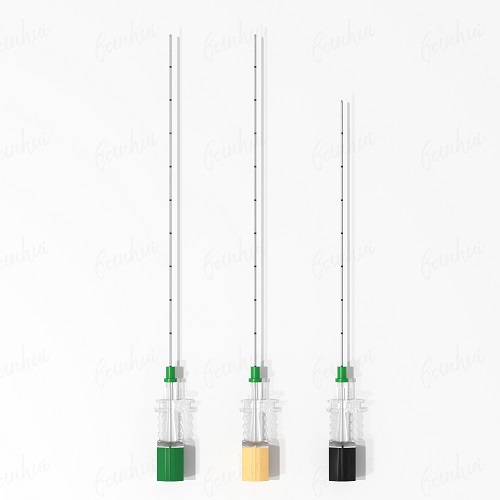
Nerve block needles are specialized medical devices used in regional anesthesia procedures to deliver local anesthetic near targeted nerves. With the increasing adoption of ultrasound-guided techniques, the design of nerve block needles has evolved to improve needle visibility, placement control, and procedural accuracy.
Different clinical applications require different needle designs. Factors such as bevel shape, needle length, gauge size, and ultrasound visibility influence the selection of an appropriate needle.
The main types of nerve block needles include:
Peripheral Nerve Block Needle
Short bevel nerve block needle
Long-Bevel nerve block needle
Tuohy nerve block needle
Echogenic ultrasound-guided nerve block needles
Understanding the differences between these needle types helps anesthesiologists and healthcare professionals select suitable devices for specific regional anesthesia procedures.
Key Takeaways
Nerve block needles are designed to deliver local anesthetic near targeted nerves during regional anesthesia.
A Peripheral Nerve Block Needle is commonly used for ultrasound-guided peripheral nerve blocks.
Short bevel nerve block needles are designed for controlled tissue interaction and reduced cutting action.
Long-Bevel nerve block needles provide sharper penetration characteristics for selected procedures.
Tuohy nerve block needles feature a curved bevel design and are widely used for epidural and catheter-based anesthesia techniques.
Echogenic technology improves needle visibility during ultrasound-guided nerve block procedures.
What Are Nerve Block Needles?
Nerve block needles are medical needles specifically designed for regional anesthesia procedures. During a nerve block procedure, clinicians position the needle tip near a target nerve and inject local anesthetic around the nerve to temporarily reduce pain transmission.
Unlike conventional injection needles, nerve block needles require specialized designs to provide controlled advancement, accurate positioning, and reliable visualization during anesthesia procedures.
Important characteristics of modern nerve block needles include:
Precise needle tip control
Balanced flexibility and stiffness
Reliable ultrasound visibility
Suitable bevel geometry
Sterile single-use construction
Modern ultrasound-guided nerve block procedures rely on enhanced needle visualization technology to help clinicians monitor needle advancement and identify the needle tip position relative to nerves and surrounding anatomical structures.
What Are the Different Types of Nerve Block Needles?
Different nerve block needle designs serve different clinical purposes. The selection depends on the target nerve location, procedure type, ultrasound technique, and clinician preference.
The major categories include bevel-based designs and application-specific needles.
1. Peripheral Nerve Block Needle
A Peripheral Nerve Block Needle is one of the most commonly used types of nerve block needles for ultrasound-guided regional anesthesia.
These needles are designed for procedures involving peripheral nerves, including:
Brachial plexus blocks
Femoral nerve blocks
Sciatic nerve blocks
Popliteal nerve blocks
Adductor canal blocks
Key Features of Peripheral Nerve Block Needles
Feature | Description | Clinical Importance |
|---|---|---|
Needle Design | Designed for controlled advancement near peripheral nerves | Supports accurate needle placement during regional anesthesia |
Ultrasound Compatibility | Supports real-time needle visualization | Helps clinicians monitor needle trajectory and tip position |
Material | Medical-grade stainless steel construction | Provides strength, flexibility, and corrosion resistance |
Applications | Peripheral regional anesthesia procedures | Suitable for multiple ultrasound-guided nerve block applications |
With ultrasound guidance, clinicians can observe:
Needle trajectory
Needle tip position
Target nerve location
Local anesthetic distribution
This makes the Peripheral Nerve Block Needle an important tool for modern regional anesthesia.
2. Short Bevel Nerve Block Needle
A short bevel nerve block needle features a shorter angled tip compared with traditional long bevel designs.
The short bevel structure provides a controlled interaction with tissue during advancement and is commonly selected when precise needle handling is required.
Advantages of Short Bevel Nerve Block Needles
Controlled Tissue Separation
The shorter bevel angle allows the needle tip to separate tissue layers with controlled movement and reduced cutting characteristics.
Improved Tip Control
Short bevel designs provide predictable tactile feedback, helping clinicians maintain control during ultrasound-guided needle advancement.
Reduced Tissue Disturbance
Because of the smaller cutting profile, short bevel needles are often selected when controlled tissue interaction is preferred.
Common Applications of Short Bevel Nerve Block Needles
Short bevel nerve block needles are frequently selected for procedures where controlled advancement and precise needle positioning are important.
Peripheral nerve blocks
Ultrasound-guided regional anesthesia
Procedures requiring controlled needle positioning
3. Long-Bevel Nerve Block Needle
A Long-Bevel nerve block needle features a longer angled cutting surface compared with short bevel designs.
The extended bevel structure provides sharper penetration characteristics, allowing easier advancement through certain tissue layers.
Characteristics of Long-Bevel Nerve Block Needles
Feature | Description | Clinical Consideration |
|---|---|---|
Bevel Design | Longer and sharper angled cutting edge | Provides easier tissue penetration in selected procedures |
Tissue Interaction | Designed for efficient advancement through resistant tissues | Selection depends on target depth and clinical requirements |
Needle Response | Provides sharp advancement characteristics | Requires careful ultrasound monitoring during insertion |
Applications of Long-Bevel Nerve Block Needles
Long-Bevel nerve block needles may be selected for:
Deep regional anesthesia procedures
Applications requiring sharper tissue penetration
Clinical situations where a longer bevel design is preferred
However, the appropriate needle design depends on the specific procedure, anatomical location, clinician experience, and ultrasound visualization requirements.
4. Tuohy Nerve Block Needle
A Tuohy nerve block needle is a specialized needle featuring a curved, blunt-pointed bevel design.
The Tuohy design is widely recognized for epidural anesthesia and catheter-based regional anesthesia techniques because of its ability to provide directional control during catheter advancement.
Features of Tuohy Needles
Curved Huber-style tip design
Controlled directional needle placement
Designed for catheter placement procedures
Common Applications of Tuohy Nerve Block Needles
Epidural anesthesia
Continuous nerve block techniques
Catheter-based regional anesthesia
Compared with standard Peripheral Nerve Block Needle designs, Tuohy needles are mainly selected when catheter advancement and directional control are required.
Comparison of Different Nerve Block Needles
Different nerve block needle designs provide different advantages depending on the clinical application. The following comparison helps explain the main differences.
Needle Type | Main Feature | Typical Application |
|---|---|---|
Peripheral Nerve Block Needle | Designed for ultrasound-guided peripheral nerve procedures | Peripheral nerve blocks |
Short Bevel Nerve Block Needle | Controlled tissue separation and predictable advancement | Ultrasound-guided regional anesthesia |
Long-Bevel Nerve Block Needle | Longer bevel design with sharper penetration characteristics | Selected deep anesthesia applications |
Tuohy Nerve Block Needle | Curved bevel design for directional control | Epidural and catheter-based techniques |
How Ultrasound Visibility Improves Nerve Block Procedures
With the development of ultrasound-guided regional anesthesia, needle visualization has become an important factor when selecting modern nerve block needles.
Traditional smooth needle surfaces may produce limited ultrasound reflection, especially when the needle is inserted at challenging angles.
Ultrasound-visible nerve block needles useechogenic technology to improve acoustic reflection and help clinicians identify needle position during ultrasound-guided procedures.
Advantages of Echogenic Nerve Block Needles
Improved Needle Identification
Specialized surface structures enhance ultrasound reflection, making the needle shaft and tip easier to distinguish from surrounding tissues.
Better Procedural Control
Clear needle visualization helps clinicians monitor:
Needle direction
Needle depth
Needle tip location
Enhanced Safety Awareness
Real-time ultrasound imaging allows clinicians to understand the relationship between:
Needle tip
Nerve structures
Blood vessels
Surrounding tissues
ShineArk Ultrasound-Visible Nerve Block Needles
ShineArk develops ultrasound-visible nerve block needles designed specifically for ultrasound-guided regional anesthesia procedures.
The product combines advanced needle manufacturing technology with enhanced ultrasound visibility to support accurate needle identification during nerve block procedures.
ShineArk ultrasound-visible nerve block needles feature:
Medical-grade stainless steel construction for reliable mechanical performance.
Echogenic surface technology to improve ultrasound reflection.
Optimized needle geometry for controlled advancement.
Sterile single-use design for clinical applications.
Multiple gauge and length options for different regional anesthesia requirements.
Echogenic Technology for Better Ultrasound Visualization
During ultrasound-guided nerve blocks, identifying the needle tip accurately is essential. ShineArk ultrasound-visible nerve block needles use laser-etched microstructures to enhance acoustic reflection and improve visualization under ultrasound imaging.
The echogenic surface design helps clinicians:
Identify the needle shaft and tip more clearly.
Monitor needle advancement in real time.
Maintain awareness of the relationship between needle position and surrounding anatomy.
Product Feature | Technology Description | Clinical Benefit |
|---|---|---|
Echogenic Surface | Laser-etched microstructures improve ultrasound reflection. | Supports clearer needle visualization during ultrasound-guided procedures. |
Stainless Steel Shaft | Medical-grade stainless steel provides strength and flexibility. | Helps maintain controlled needle advancement. |
Multiple Specifications | Different gauges and lengths available. | Suitable for different anatomical locations and block techniques. |
How to Choose the Right Nerve Block Needle?
Selecting the appropriate nerve block needle depends on several factors, including the procedure type, target anatomy, ultrasound technique, and clinician preference.
1. Procedure Type
Different regional anesthesia procedures require different needle designs. A Peripheral Nerve Block Needle is commonly selected for ultrasound-guided peripheral nerve blocks, while Tuohy needles are mainly used for catheter-oriented anesthesia techniques.
2. Ultrasound Guidance Method
For ultrasound-guided procedures, echogenic nerve block needles can improve needle visibility and help clinicians identify the needle tip during advancement.
Features to consider include:
Ultrasound reflection performance
Needle tip visibility
Compatibility with ultrasound-guided techniques
3. Needle Bevel Design
The bevel structure influences needle interaction with tissue.
Short bevel nerve block needle: Designed for controlled advancement and tissue separation.
Long-Bevel nerve block needle: Provides sharper penetration characteristics.
Tuohy nerve block needle: Designed for directional control and catheter placement applications.
4. Needle Size
Gauge and length selection should match the target anatomical location and procedure requirements. Different block locations may require different needle dimensions.
FAQ
What are the different types of nerve block needles?
The main types include Peripheral Nerve Block Needle, short bevel nerve block needle,Long-Bevel nerve block needle,and Tuohy nerve block needle. Each design provides different characteristics for specific regional anesthesia applications.
What is a Peripheral Nerve Block Needle used for?
A Peripheral Nerve Block Needle is used to deliver local anesthetic near peripheral nerves during regional anesthesia procedures, including brachial plexus blocks, femoral nerve blocks, and sciatic nerve blocks.
What is the difference between short bevel and Long-Bevel nerve block needles?
Short bevel nerve block needles provide controlled tissue interaction and predictable advancement, while Long-Bevel nerve block needles feature a longer cutting edge designed for sharper tissue penetration.
Why are echogenic nerve block needles important?
Echogenic nerve block needles improve ultrasound visibility by enhancing acoustic reflection. This helps clinicians identify needle position more clearly during ultrasound-guided nerve block procedures.
Are Tuohy needles used for nerve blocks?
Tuohy needles are mainly associated with epidural anesthesia and catheter-based regional anesthesia techniques. Their curved bevel design provides directional control during catheter placement procedures.
How do ultrasound-visible nerve block needles improve procedures?
Ultrasound-visible nerve block needles use echogenic surface technology to improve needle visualization. Better visibility helps clinicians monitor needle advancement, confirm tip position, and maintain awareness of surrounding anatomy during regional anesthesia procedures.
Please Contact Us!
Recent News
1.Ultrasound Guided Nerve Block Needle: Design, Benefits, and Clinical Applications
2026-08-042.What Is an Echogenic Needle for Ultrasound Guided Nerve Blocks?
2026-07-203.What Needle Is Used in Regional Anesthesia?
2026-07-154.Ultrasound Visible Needle vs Standard Needle: What Is the Difference in Ultrasound-Guided Procedures?
2026-07-155.Why Choose ShineArk as Your Ultrasound Nerve Block Needle Supplier?
2026-07-096.What Size Needle for Femoral Nerve Block?
2026-07-017.What Is the Use of Puncture Needles?
2026-06-298.What Kind of Needle Is Used for a Peripheral Nerve Block?
2026-06-29