



What Kind of Needle Is Used for a Peripheral Nerve Block?
Peripheral nerve blocks have become one of the most important techniques in modern regional anesthesia, offering targeted pain control, faster recovery, and reduced reliance on general anesthesia. However, one of the most common questions from clinicians and medical buyers is: What kind of needle is used for a peripheral nerve block?
In most clinical settings, a specialized Peripheral Nerve Block Needle is used—often referred to as a puncture needle designed specifically for precise nerve localization, safety, and ultrasound compatibility.
Key Takeaways
A Peripheral Nerve Block Needle is a specialized puncture needle designed for regional anesthesia.
It is engineered for precision, echogenic visibility, and controlled drug delivery.
Modern puncture needle designs improve patient safety and reduce nerve injury risk.
Ultrasound-guided procedures rely heavily on needle visibility and tip accuracy.
Needle choice directly affects block success rate and procedural efficiency.
ShineArk provides ultrasound-visible puncture needle solutions for nerve block applications.
Understanding Peripheral Nerve Blocks and Why Needle Choice Matters
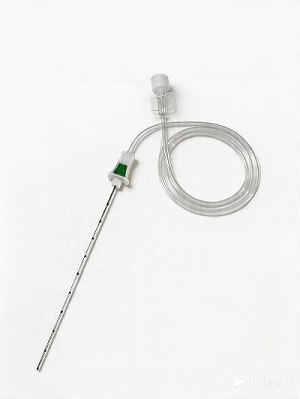
A peripheral nerve block is a medical technique where anesthetic drugs are injected near specific nerves to block pain signals. This technique requires extreme precision because the target area is small and close to sensitive neural structures.
That is why a standard injection needle is not suitable. Instead, clinicians use a specially designed puncture needle, commonly known as a Peripheral Nerve Block Needle, which allows controlled navigation toward nerve structures.
A high-quality puncture needle improves:
Accuracy of nerve targeting
Patient comfort during insertion
Safety during drug delivery
Visualization under ultrasound
What Kind of Needle Is Used for a Peripheral Nerve Block?
The most commonly used needle in regional anesthesia is the Peripheral Nerve Block Needle, a type of puncture needle designed specifically for nerve localization procedures.
These needles typically have the following characteristics:
Ultra-sharp bevel or short bevel tip for controlled penetration
Echogenic surface for ultrasound visibility
Insulated shaft for nerve stimulation compatibility
Length variations depending on target nerve depth
Fine control for incremental advancement
Unlike standard hypodermic needles, a puncture needle used for nerve blocks is designed to minimize tissue trauma and maximize precision.
Main Types of Puncture Needles Used in Nerve Block Procedures
Different clinical scenarios require different needle designs. Below is a simplified breakdown:
| Needle Type | Description | Common Use |
|---|---|---|
| Short-bevel puncture needle | Rounded tip, reduces nerve trauma | Superficial nerve blocks |
| Long-bevel Peripheral Nerve Block Needle | Sharper tip for controlled penetration | Deep nerve blocks |
| Echogenic puncture needle | Enhanced ultrasound visibility | Ultrasound-guided anesthesia |
| Insulated nerve block needle | Works with nerve stimulation | Precision nerve localization |
Each Peripheral Nerve Block Needle type is selected based on anatomical depth, imaging method, and procedural requirements.
Why Puncture Needle Design Is Critical in Regional Anesthesia
The design of a puncture needle is not just about sharpness—it directly affects patient safety and procedural success.
A well-designed Peripheral Nerve Block Needle ensures:
1. Accurate Nerve Targeting
Improved tip control allows clinicians to position the needle near the nerve without penetrating it.
2. Reduced Tissue Trauma
Special bevel designs reduce resistance during insertion, minimizing tissue damage.
3. Improved Ultrasound Visibility
Modern puncture needle surfaces are engineered to reflect ultrasound waves effectively.
4. Controlled Drug Delivery
Needle lumen design ensures smooth anesthetic flow around nerve structures.
Technical Features of a High-Quality Peripheral Nerve Block Needle
Below is a more technical overview of what defines a professional-grade puncture needle:
| Feature | Function | Clinical Benefit |
|---|---|---|
| Echogenic coating | Improves ultrasound reflection | Better visualization |
| Ultra-sharp tip | Reduces insertion force | Less patient discomfort |
| Depth markings | Helps control insertion depth | Increased safety |
| Insulated shaft | Enables nerve stimulation use | Accurate nerve localization |
| Flexible stainless steel | Prevents bending errors | Better procedural control |
These features are essential in modern Peripheral Nerve Block Needle applications.
Role of Ultrasound in Puncture Needle Usage
Ultrasound guidance has transformed regional anesthesia. However, ultrasound is only as effective as the visibility of the puncture needle used.
A standard needle may disappear on the ultrasound screen, but a specialized Peripheral Nerve Block Needle is designed to remain clearly visible during insertion.
This improves:
Real-time tracking
Needle tip positioning accuracy
Safety during nerve proximity
Overall block success rates
Clinical Advantages of Using a Specialized Peripheral Nerve Block Needle
Using a dedicated puncture needle offers multiple clinical advantages:
Higher success rate of nerve blocks
Reduced complications such as nerve injury
Faster procedure time
Lower anesthetic dosage requirement
Improved patient recovery experience
These benefits make the Peripheral Nerve Block Needle an essential tool in modern anesthesia practice.
How ShineArk Supports Advanced Puncture Needle Solutions
In the field of medical puncture technology, precision manufacturing is essential. ShineArk focuses on developing high-performance medical needles designed for regional anesthesia applications.
Through its engineering and production capabilities, ShineArk provides solutions that emphasize:
Stable puncture needle performance
Enhanced ultrasound visibility
Consistent manufacturing quality
Clinical usability in nerve block procedures
How to Choose the Right Peripheral Nerve Block Needle
Selecting the correct puncture needle depends on several factors:
Target nerve depth
Imaging method (ultrasound or nerve stimulation)
Patient anatomy
Required precision level
Anesthetic technique
Clinicians often prefer echogenic Peripheral Nerve Block Needle designs when using ultrasound guidance for improved visibility.
Common Clinical Workflow Using a Puncture Needle
A simplified workflow of nerve block procedure:
Patient positioning
Ultrasound identification of nerve
Skin sterilization
Insertion of puncture needle
Real-time needle guidance
Confirmation of nerve proximity
Injection of anesthetic agent
Each step depends heavily on the performance of the Peripheral Nerve Block Needle.
Frequently Asked Questions (FAQ)
1. What is a Peripheral Nerve Block Needle used for?
It is used to deliver anesthetic near specific nerves to block pain signals during surgical or diagnostic procedures.
2. Is a puncture needle different from a normal injection needle?
Yes. A puncture needle used for nerve blocks is designed for precision, ultrasound visibility, and controlled insertion.
3. Why is ultrasound important in nerve block procedures?
Ultrasound helps clinicians visualize both nerves and the Peripheral Nerve Block Needle in real time for accurate placement.
4. What makes a good Peripheral Nerve Block Needle?
Key features include echogenic design, sharp tip, depth markings, and compatibility with nerve stimulation.
5. Can all puncture needles be used for nerve blocks?
No. Only specially designed puncture needles are suitable for safe and effective peripheral nerve block procedures.
6. What role does ShineArk play in needle manufacturing?
ShineArk develops ultrasound-visible puncture needle solutions tailored for nerve block applications.
Conclusion
A peripheral nerve block requires precision, safety, and real-time control, which is why a specialized Peripheral Nerve Block Needle—also known as a puncture needle—is essential in modern anesthesia practice. Its design ensures accurate nerve targeting, improved visualization, and better clinical outcomes.
As regional anesthesia continues to advance, high-quality puncture needle technology will remain at the core of safer and more efficient procedures. Companies like ShineArk are contributing to this evolution by developing reliable, ultrasound-visible solutions for clinical use.
Please Contact Us!
Recent News
1.Ultimate Guide to Ultrasound-Guided Nerve Block Needles: Safe, Precise, and Disposable Solutions
2026-05-292.Why choose ultrasound guided puncture needle for regional anesthesia
2026-06-023.The Important Role Of Ultrasound-Guided Nerve Block
2026-04-024.What's a Nerve Block Needle, and How Does It Work?
2026-06-085.How to Select the Right Peripheral Nerve Block Needle
2026-06-126.What is a puncture needle?
2026-06-267.Pulse Pressure Tourniquet or Traditional Tourniquet Which Helps More
2026-06-19