



Why choose ultrasound guided puncture needle for regional anesthesia
You want the best accuracy and safety for every regional anesthesia procedure. If you use an ultrasound guided puncture needle, you can see what is happening right away. Traditional techniques do not let you see this. New changes in ultrasound are important. Echogenic needles have special marks that bounce back ultrasound waves better. Some needles use polymer coatings to make tiny bubbles for clearer pictures. These improvements help you know where your needle is going. This means you do not have to guess. Using ultrasound for anesthesia is safer for you and your patients.
Key Takeaways
Ultrasound guided puncture needles let doctors see in real time. This helps make the procedure more accurate and safe.
Using ultrasound means doctors do not need to move the needle as much. This causes less pain for patients. It also helps doctors get it right the first time.
Ultrasound guidance lowers the chance of hurting nerves or blood vessels. This makes the procedure safer and helps patients do better.
The special design of ultrasound guided needles helps doctors find nerves exactly. This makes anesthesia work better and helps patients get better faster.
Doctors need good training and the right tools to get the most from ultrasound guided techniques in regional anesthesia.
Accuracy with Ultrasound Guided Puncture Needle
Real-Time Needle Visualization
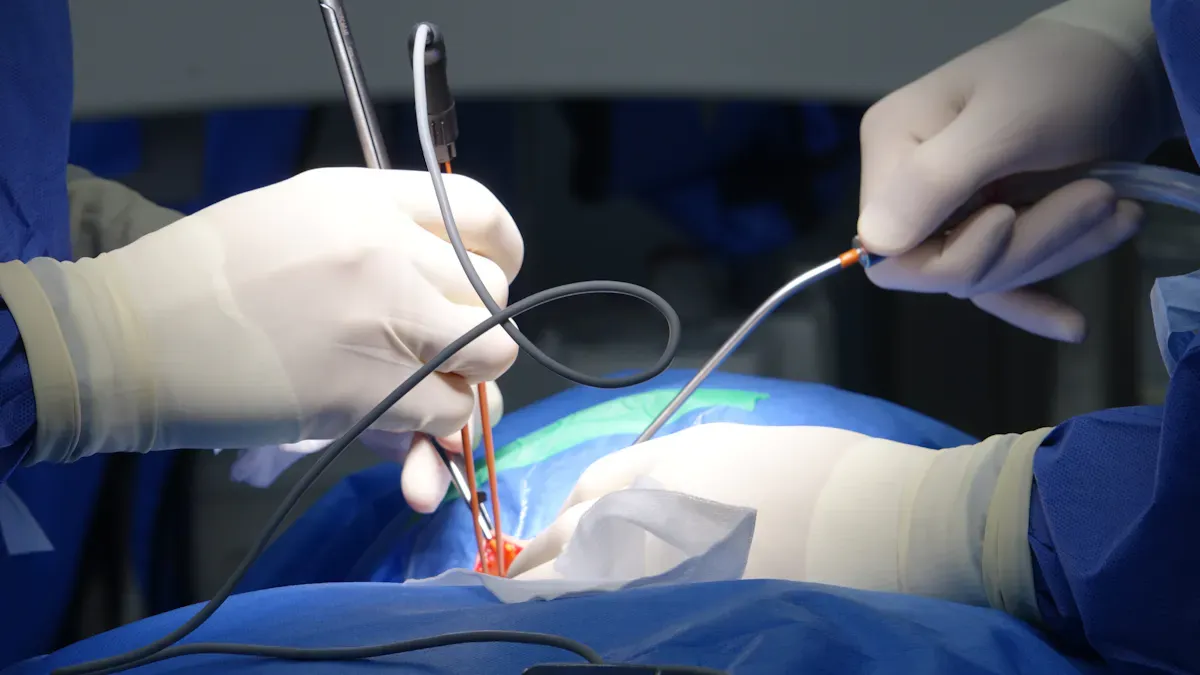
You can watch the needle tip as you move it. This helps you avoid mistakes during regional anesthesia. With ultrasound imaging, you see the needle go into the tissue. You also see it get close to the nerve. You do not have to guess where the tip is. If you need to change your technique, you can do it right away.
Real-time ultrasound guidance lets you control the needle better. It makes the procedure safer. You can stop injuries that happen when you cannot see the needle tip. Advanced tracking, like AI, keeps the needle in view all the time. This lowers the chance of putting medicine in the wrong place.
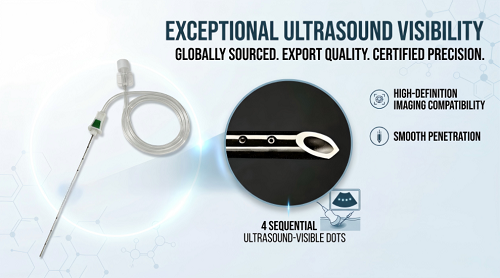
The ultrasound guided puncture needle from ShineArk Medical lets you see all around the needle. The bilateral back bevel design helps you put the needle exactly where you want. You can see the needle from every side. This makes your procedure more accurate and safe.
The number of accidental blood vessel injuries drops from 40% with old methods to 10% with real-time ultrasound.
You need to move the needle fewer times. The ultrasound-guided way needs about 1.44 passes. The old way needs about 2.52 passes.
You succeed on the first try more often. With ultrasound, you reach 76.0%. With the old way, you reach 40.0%.
Precise Nerve Targeting
You can aim at the nerve very well using ultrasound-guided nerve block. Ultrasound shows you the nerve, blood vessels, and where the needle is going. You can put the needle tip close to the nerve without touching it. This lowers the risk of hurting the nerve and makes the anesthesia work better.
Seeing nerves, vessels, and needle path in real time helps you succeed on the first try.
You use less local anesthetic because you can see the nerve and put the needle in the right spot.
You have fewer problems like hitting a blood vessel or putting the needle in the nerve.
Patients feel pain relief faster and get better sooner.
The lowest stimulation threshold is 0.60 mA outside the nerve and 0.3 mA inside the nerve.
36% of patients show an EMR twitch at less than 0.2 mA when the needle is in the nerve.
A muscle response at less than 0.2 mA means the needle is touching or inside the nerve.
You use point of care ultrasound to help with anesthesia. You trust ultrasound to make your work more accurate and safe. The ultrasound guided puncture needle helps you do nerve blocks with confidence. You can see the needle tip clearly with high-contrast ultrasound. You can tell the difference between tissue layers and avoid problems. The special design and clear view of the needle make your work fast and reliable.
Feature | Benefit |
|---|---|
360° visibility | Pinpoint positioning |
Bilateral back bevel design | Accurate nerve targeting |
High-contrast echogenicity | Clear visualization of the needle |
Premium materials | Enhanced safety |
You make your work more accurate and help patients do better with ultrasound-guided regional anesthesia. You make every nerve block safer and work better.
Enhanced Safety in Regional Anesthesia
Minimizing Nerve and Vascular Injury
You want your patients to stay safe during anesthesia. Using ultrasound guided puncture needle helps you see the needle’s path. You do not have to guess where it is. You can watch the needle move near nerves and blood vessels. This helps you avoid hurting them.
You see nerves and blood vessels with ultrasound.
You follow the needle tip as it moves forward.
You stop the needle before it touches a nerve or vessel.
You lower the chance of hitting a vein by watching closely.
Ultrasound-guided regional anesthesia gives you more control. You can move the needle if it gets too close to a nerve. This protects the nerve and lowers the risk of damage. You also avoid poking blood vessels by mistake. This means fewer problems for your patients.
The ShineArk AN-N/AN-M series helps you work better. The needle tip is easy to see on ultrasound because it is bright. You can see the needle even in deep tissue. The Ultrasound visible Puncture needle is made from strong 304 medical stainless steel. It is tough and bends without breaking. You do not worry about the needle breaking during a nerve block. The 360° visibility and special back bevel design help you guide the needle well.
Tip: Always use ultrasound to check the needle tip before you inject. This simple step can stop many injuries.
Reducing Complications and LAST
You want to stop problems during anesthesia. One big problem is local anesthetic systemic toxicity (LAST). This happens if too much anesthetic gets into the blood. You can lower this risk by using ultrasound.
In a study with over 20,000 patients, only 22 had LAST during more than 25,000 nerve blocks.
The rate of LAST was less than 1 in 1,000 blocks with ultrasound.
Ultrasound helps you put the anesthetic in the right spot, away from blood vessels.
Ultrasound lets you see the tissue layers. You can put the needle tip in the right place for the nerve block. You use less anesthetic because you know where to inject. This lowers the chance of problems. You also see the anesthetic spread in real time. If the medicine goes the wrong way, you can stop and fix it.
The AN-N/AN-M series Ultrasound visible Puncture needle makes your work safer. The needle tip is bright on ultrasound, so you see it clearly. The strong materials and special design help you avoid needle problems. You help your patients by lowering risks and making each procedure safer.
Feature | How It Improves Safety |
|---|---|
High-contrast echogenicity | Easy to see needle tip |
Premium stainless steel | Less chance of needle breaking |
360° visibility | Helps you place the needle right |
Bilateral back bevel design | Needle moves smoothly, less trauma |
You can trust ultrasound guided puncture needle to keep patients safe. You use the best tools and new technology to make anesthesia safer. You see better, act faster, and stop problems before they happen.
Patient Outcomes and Comfort
Higher Success Rates
You want your patients to feel safe and comfortable. Using an ultrasound guided puncture needle helps you do a nerve block right the first time. You can see the needle tip with ultrasound. This means you do not need to poke the skin many times. Fewer needle passes mean less pain for your patients. You use ultrasound to guide your needle and get better results.
Many studies show ultrasound helps you succeed on the first try. You do not need to insert the needle as much. This lowers the chance of problems. The American College of Emergency Physicians says ultrasound makes patients happier and safer. Ultrasound imaging helps when it is hard to find a vein. Nurses and doctors say they succeed more and poke the skin less with ultrasound guided puncture needle.
You get the nerve block right on the first try more often.
You finish the procedure faster and patients feel less pain.
You lower the chance of problems and help patients do better.
You help babies and adults who are hard to treat.
Faster Onset and Recovery
You make anesthesia work faster when you use ultrasound. You see the nerve and put the Ultrasound visible Puncture needle in the right spot. You give the anesthetic quickly and easily. Patients feel better sooner and heal faster after the block.
The AN-N/AN-M series Ultrasound visible Puncture needle has features that help you work better. You see the needle tip clearly with high-contrast ultrasound. You do not need to poke as many times. You spend less time on the procedure. Patients feel less pain and are more comfortable during the block.
Tip: Use ultrasound imaging for every step to help patients feel better.
Evidence Type | Details |
|---|---|
Needle Visibility | Better with in-plane advancement |
Needle Insertions | Fewer needed (2 instead of 6 with old ways) |
Procedure Time | Shorter (238 seconds instead of 334 seconds) |
Patient Comfort | Better during block placement |
You make anesthesia safer and more comfortable for patients. You use ultrasound guided puncture needle to get a good nerve block and better results every time.
Efficiency and Ease of Use
Streamlined Workflow
You want your work to be fast and easy. Using ultrasound guided puncture needle saves time. You do not need to label things by hand. You can pay attention to your patient and the procedure.
Ultrasound guidance shows everything as it happens. You do not guess where the needle is.
You can do nerve block procedures in the pre-op area. This helps surgeries start on time.
Real-time imaging means fewer needle insertions. Patients feel less pain and you finish sooner.
Needle placement takes less time with ultrasound. Studies show lumbar puncture takes about 3.3 minutes with ultrasound. The old way takes 6.4 minutes. You save more than three minutes each time.
Ultrasound-guided pnb makes your work easier. You spend less time and help patients feel better faster.
Benefits for Clinicians
You want tools that are easy and safe to use. The AN-N/AN-M series Ultrasound visible Puncture needle has a handle that fits your hand well. You can control the needle easily. The 304 medical stainless steel is strong and flexible. It lowers the chance of breaking. The 500mm TPU extension tube helps you inject safely and cleanly.
Ultrasound imaging lets you see the needle tip clearly. You can see tissue layers and guide the needle well. This makes anesthesia safer and helps you feel confident.
Evidence Type | Findings |
|---|---|
Safety | Ultrasound guidance lowers problems during vascular access. |
Effectiveness | Success rates are higher with ultrasound guidance. |
Efficiency | Fewer punctures and less time needed for vascular access. |
Patient Satisfaction | Patients are happier with ultrasound-guided techniques. |
You use ultrasound for anesthesia to make your job easier and safer. The advanced design of the ultrasound guided puncture needle helps you every time. You get better results for you and your patients.
Evidence and Practical Considerations
Clinical Studies and Guidelines
Ultrasound is trusted for regional anesthesia because many studies show it works well. Most patients feel better after nerve blocks with ultrasound. About 70.8% of patients say their pain is much less. Hospitals have fewer problems when they use ultrasound. One study looked at 11 emergency departments. They found only a 0.4% complication rate in over 2,700 procedures. Real-time ultrasound imaging helps you avoid needle injuries. It also lowers the risk of local anesthetic toxicity.
Many guidelines say to use ultrasound for nerve blocks. The Australian and New Zealand College of Anaesthetists supports ultrasound-guided techniques. These guidelines say ultrasound helps patients do better and lets you work faster. You can see the needle and nerve as you work. If you need to change something, you can do it right away. This leads to better results and fewer problems.
Training and Equipment Needs
You need good training to use ultrasound safely. You must learn how to find nerves and other parts with imaging. Practice with video lessons, trainers, and virtual reality can help you improve. Working with skilled teachers is important. You should practice on simulators before working with real patients. Good training helps you control the probe and keep the needle in view. You get more confident as you do more procedures.
You also need the right equipment for ultrasound-guided nerve blocks. Here is what you need:
Equipment Type | Description |
|---|---|
Needle Gauge | 22-gauge insulated needles for single-shot nerve blocks |
Needles that show up clearly on ultrasound | |
Ultrasound Machines | Portable machines with high-quality imaging for real-time guidance |
Monitoring Devices | Tools to watch for problems like anesthetic toxicity |
Limitations and Regulatory Compliance
Ultrasound imaging depends on your skill. Sometimes, it is hard to see the needle tip if you do not use the right technique. Body size and swelling can make imaging less clear. Problems like pneumothorax or wrong needle placement can still happen, but they are rare.
You want tools that are safe and reliable. ShineArk Medical follows strict rules like ISO13485 and MDR. They make needles in a Class 8 cleanroom. You get full technical files and certificates for every product. ShineArk Medical also offers custom options and supports you worldwide. This means you can trust the quality and safety of your ultrasound guided puncture needle.
You can make your work better with an ultrasound guided puncture needle. This tool lets you see the needle as you use it. You get more accurate results and fewer problems. Studies show ultrasound guidance lowers nerve injury risk. It makes nerve blocks safer, even when cases are hard. Patients heal faster and feel less pain.
You get better outcomes.
You finish your work faster.
You keep patients safe.
Try using advanced needle technology to improve regional anesthesia.
FAQ
What is an ultrasound guided puncture needle?
You use this Ultrasound visible Puncture needle to see the tip during anesthesia. It shows up well on ultrasound. You can place it exactly where you want.
How does ultrasound guidance improve safety?
You see the Ultrasound visible Puncture needle and important parts as you work. This helps you avoid nerves and blood vessels. You lower the risk of injury. The procedure is safer for your patients.
Can I use these Ultrasound visible Puncture needles for all nerve blocks?
You can use these needles for most nerve blocks. They work well for brachial plexus blocks and other regional anesthesia.
What makes the AN-N/AN-M series Ultrasound visible Puncture needles special?
360° visibility
High-contrast echogenicity
Strong 304 medical stainless steel
Ergonomic handle for easy control
These features help you work with more accuracy and safety.
Do I need special training to use ultrasound guided needles?
You need training to use ultrasound and these needles well. Practice helps you learn to see the needle tip and guide it safely. Many hospitals offer courses and hands-on practice.