



The Important Role Of Ultrasound-Guided Nerve Block
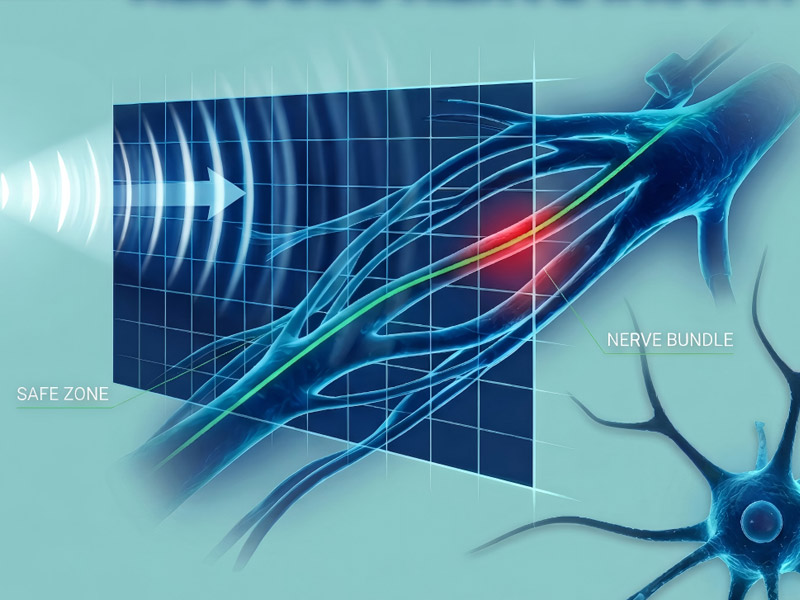
In recent years, the use of ultrasound in regional anesthesia has become increasingly widespread. Ultrasound-guided nerve blocks can improve the success rate of nerve blocks, reduce the dosage of local anesthetics, lower the risk of accidental vascular injury, shorten the onset time of sensory blockade, minimize nerve damage and complications, and when used in combination with general anesthesia, reduce opioid requirements, thereby enhancing the safety and accuracy of nerve blocks. The use of ultrasound guidance in nerve blocks allows clear visualization of neural structures as well as the blood vessels, muscles, bones, and internal organs surrounding the nerves. During needle insertion, it provides real-time imaging of the needle's path, enabling adjustments in direction and depth as needed, allowing the needle to reach the target structure more quickly and accurately. During injection, the spread of the anesthetic solution can be observed, helping to detect unintentional intravascular or intraneural injections. Ultrasound guidance also aids in identifying anatomical variations, improves the success rate of puncture and blockade, shortens the onset time of sensory blockade, and significantly reduces the difficulty of neuraxial puncture in elderly patients, children, obese patients, and women in labor.