



Ultimate Guide to Ultrasound-Guided Nerve Block Needles: Safe, Precise, and Disposable Solutions
Introduction
Ultrasound-guided nerve block is now the gold standard in regional anesthesia, acute pain management, and chronic pain intervention worldwide. The foundation of every successful ultrasound-guided nerve block is a Ultrasound-Guided Nerve Block needle that offers clear echogenicity, precise control, minimal tissue trauma, and reliable safety. For clinicians, choosing the right Disposable ultrasound-guided nerve block needle and appropriate gauge size directly affects block success rate, patient comfort, and procedural safety.
This complete guide explains everything you need to know about nerve block needles, including their clinical value, design features, safety benefits, and detailed gauge selection: 16G Ultrasound-Guided Puncture Needle, 18G Ultrasound-Guided Puncture Needle, 21G Ultrasound-Guided Puncture Needle, 22G ultrasound guided puncture needle, 23G Ultrasound-Guided Puncture Needle, and 25G Ultrasound-Guided Puncture Needle.
Written for anesthesiologists, pain specialists, emergency clinicians, and surgical teams, this article uses simple, clear language to avoid overly technical jargon while maintaining medical accuracy. It helps you select the best needle for every nerve block procedure with confidence.
1. What Is an Ultrasound-Guided Nerve Block Needle?
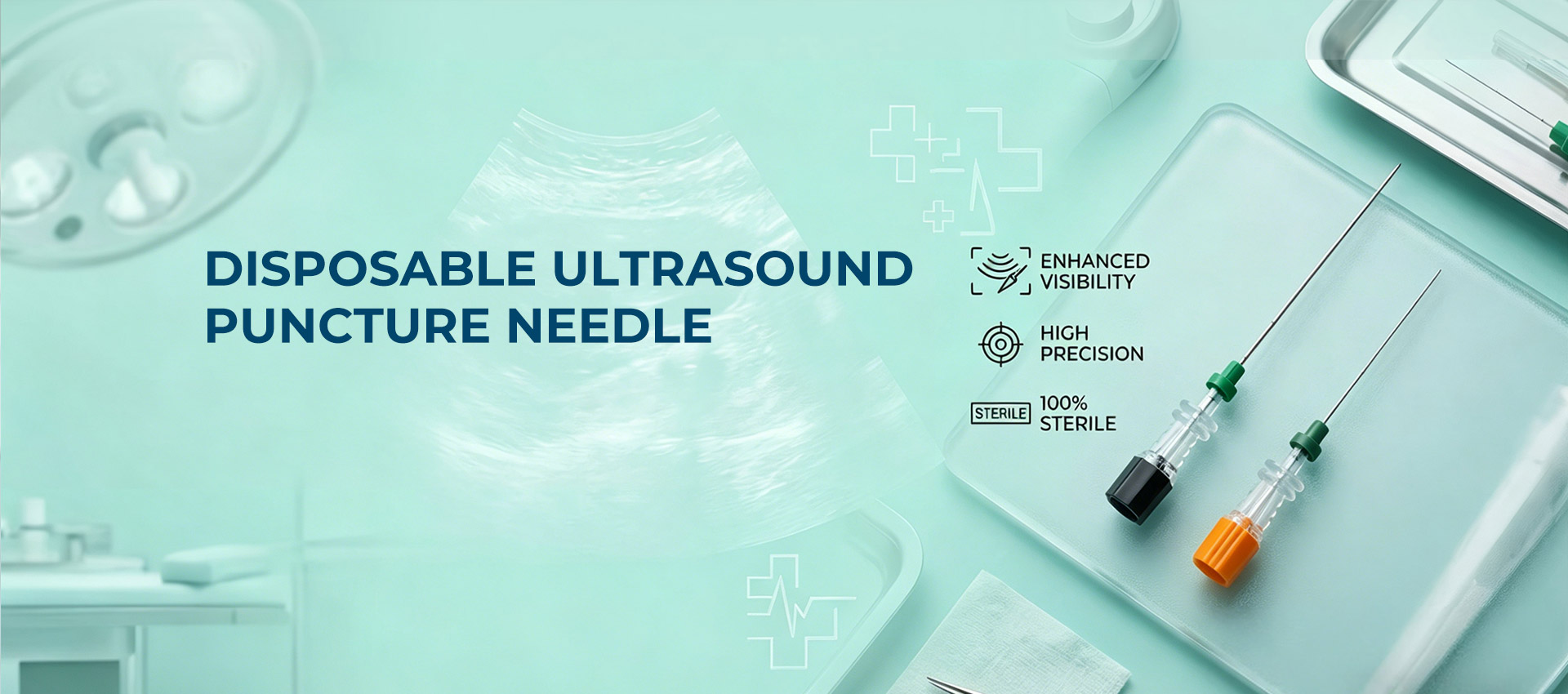
An Ultrasound-Guided Nerve Block needle is a specialized, single-use medical device designed specifically for regional anesthesia and pain interventions under real-time ultrasound visualization. Unlike standard hypodermic needles, these Disposable ultrasound-guided nerve block needle tools feature enhanced echogenic designs so the shaft and tip remain highly visible under ultrasound, even in deep or complex tissue layers.
These nerve block needles allow clinicians to visualize the entire needle path, avoid critical structures such as blood vessels and internal organs, and accurately position the needle tip next to the target nerve. Precise deposition of local anesthetic improves block success, reduces complications, and lowers anesthetic dosage.
Modern Ultrasound-Guided Nerve Block needle designs prioritize safety, sharpness control, tissue-friendly penetration, and ergonomic handling for both in-plane and out-of-plane techniques.
2. Core Clinical Value of Ultrasound-Guided Nerve Block Needles
The use of dedicated Disposable ultrasound-guided nerve block needle tools transforms regional anesthesia by delivering measurable clinical advantages:
Higher Block Success Rate: Real-time visualization ensures accurate needle placement near the nerve, eliminating guesswork and significantly improving first-attempt success.
Reduced Complications: Clinicians avoid blood vessels, nerves, and organs, lowering risks of hematoma, vascular puncture, nerve injury, and pneumothorax.
Lower Local Anesthetic Dosage: Precise perineural delivery means less anesthetic is needed, reducing systemic toxicity risks while maintaining effective blockade.
Faster Onset of Sensory Block: Accurate needle-to-nerve positioning speeds the onset of anesthesia, improving operating room efficiency and patient satisfaction.
Reduced Opioid Consumption: Effective regional blocks reduce or eliminate the need for intraoperative and postoperative opioids, lowering nausea, sedation, and dependency risks.
Improved Safety for Vulnerable Patients: Elderly, pediatric, obese, and obstetric patients benefit greatly from reduced technical difficulty and improved anatomical visibility.
These advantages make nerve block needles essential tools in modern anesthesia clinics, emergency departments, and pain management centers.
3. Key Design Features of High-Quality Disposable Ultrasound-Guided Nerve Block Needle
Premium Ultrasound-Guided Nerve Block needle products share critical design features that elevate performance and safety:
Enhanced Echogenicity: Patented laser-engraved shaft and tip reflect ultrasound waves consistently, keeping the needle visible at any angle or depth.
Medical-Grade Stainless Steel: High-toughness 304 stainless steel resists bending or kinking during deep tissue insertion.
Ultra-Sharp, Precision-Ground Tip: Provides smooth, controlled penetration with minimal tissue trauma and less patient discomfort.
Laser Depth Markings: Clear 10mm interval markings allow accurate depth control during insertion.
Sterile, Disposable Design: Single-patient use eliminates cross-contamination and ensures consistent performance.
Extended TPU Connector: Safe, flexible injection access away from the procedural area, improving ergonomics.
These design elements make Disposable ultrasound-guided nerve block needle tools reliable, user-friendly, and clinically effective.
4. Complete Gauge Guide: 16G, 18G, 21G, 22G, 23G, 25G Ultrasound-Guided Puncture Needle
Selecting the correct gauge is critical for safety, success, and patient comfort. Below is a complete clinical guide to the most commonly used sizes.
16G Ultrasound-Guided Puncture Needle
Thicker, robust needle for deep, tough tissue layers; suitable for deep plexus blocks, large nerve trunks, and thickened tissue planes; provides maximum visibility and structural stability.
18G Ultrasound-Guided Puncture Needle
Versatile deep-block needle with high visibility and rigidity; ideal for brachial plexus, lumbar plexus, sciatic nerve blocks, and thick tissue; balances strength and control for deep interventions.
21G Ultrasound-Guided Puncture Needle
All-purpose intermediate gauge for general nerve blocks; suitable for femoral, lateral femoral cutaneous, ilioinguinal, and occipital nerve blocks; balances penetration, visibility, and tissue comfort.
22G ultrasound guided puncture needle
Most widely used universal nerve block gauge; ideal for upper and lower extremity blocks, superficial and medium-depth nerves; excellent balance of sharpness, flexibility, and visibility.
23G Ultrasound-Guided Puncture Needle
Finer needle for superficial, delicate blocks; ideal for digital nerves, facial nerves, and pediatric patients; minimizes trauma in sensitive regions.
25G Ultrasound-Guided Puncture Needle
Ultra-fine, atraumatic needle for superficial, sensitive blocks; perfect for pediatric patients, small superficial nerves, and high-comfort procedures; minimum pain and tissue irritation.
This full range of Ultrasound-Guided Puncture Needle gauges covers every clinical scenario in regional anesthesia and pain medicine.
5. How to Choose the Right Nerve Block Needle Gauge
Use this practical clinical framework to select the ideal Ultrasound-Guided Nerve Block needle gauge.
Choose 16G or 18G if: You need deep tissue penetration; patient has thick tissue, obesity, or scarring; you require maximum needle rigidity and visibility.
Choose 21G or 22G if: You need general-purpose versatility; performing common peripheral nerve blocks; balancing penetration, control, and patient comfort.
Choose 23G or 25G if: Working on superficial or delicate nerves; treating pediatric, elderly, or sensitive patients; minimizing trauma and pain is a priority.
Always match the Disposable ultrasound-guided nerve block needle to depth, tissue density, patient anatomy, and block type.
6. Safe Technique Guidelines for Ultrasound-Guided Nerve Block Needles
Safe and effective use of nerve block needles relies on consistent, evidence-based technique:
Visualize First: Identify the target nerve, vessels, and organs before inserting the needle.
Maintain Tip Visualization: Never advance the needle if the tip is not clearly visible.
Use Aspiration Before Injection: Always aspirate to rule out intravascular placement before injecting.
Inject Incrementally: Inject small, repeated aliquots while observing spread under ultrasound.
Watch for Perineural Spread: Confirm the “donut sign” — anesthetic surrounding the nerve — for reliable blockade.
Avoid Intraneural Insertion: Stop if you suspect intraneural penetration to prevent nerve injury.
Following these steps ensures safe, effective use of any Ultrasound-Guided Nerve Block needle.
7. Advantages of Disposable Ultrasound-Guided Nerve Block Needle
Disposable design is now the global standard for nerve block needles for compelling reasons:
Infection Control: Single-use eliminates cross-contamination risks.
Consistent Performance: New, sharp, and reliable every time — no dulling or damage from reprocessing.
Time Savings: Ready to use immediately, no sterilization or assembly required.
Cost Efficiency: Reduces labor, reprocessing, and compliance costs.
Regulatory Compliance: Meets ISO, CE, and MDR standards for safety and traceability.
These benefits make Disposable ultrasound-guided nerve block needle tools the standard of care in modern healthcare facilities.
8. Clinical Applications of Ultrasound-Guided Nerve Block Needles
Ultrasound-Guided Nerve Block needle tools support a vast range of procedures:
Upper Extremity Blocks: Brachial plexus, axillary, musculocutaneous, radial, ulnar, and median nerve blocks
Lower Extremity Blocks: Femoral, sciatic, popliteal, saphenous, and lateral femoral cutaneous nerve blocks
Truncal Blocks: TAP, rectus sheath, ilioinguinal, intercostal, and paravertebral blocks
Neck & Head Blocks: Cervical plexus, greater occipital, and superficial facial nerve blocks
Chronic Pain Intervention: Perineural injections, pulsed ablation support, and neuropathic pain blocks
Pediatric & Geriatric Care: Safe, minimally traumatic blocks for vulnerable patients
No matter the application, the right Ultrasound-Guided Puncture Needle improves outcomes.
9. Why Choose Premium Ultrasound-Guided Nerve Block Needles from ShineArk Medical
ShineArk Medical is a trusted manufacturer of high-performance Disposable ultrasound-guided nerve block needle tools designed for clinical excellence:
Enhanced Echogenic Design: 360° laser engravings ensure full visibility under ultrasound.
Full Gauge Range: Complete lineup: 16G, 18G, 21G, 22G, 23G, 25G Ultrasound-Guided Puncture Needle
Premium Medical Stainless Steel: High strength, no bending, atraumatic penetration.
Class 8 Cleanroom Production: ISO 13485 certified, safe, sterile, and reliable.
Full Regulatory Support: CE and MDR documentation available for global distribution.
OEM & ODM Services: Custom lengths, gauges, and private-label packaging.
Our Ultrasound-Guided Nerve Block needle products are trusted in operating rooms, pain clinics, and emergency departments worldwide.
10. FAQ:
Q1: What is an Ultrasound-Guided Nerve Block needle?
A: It is a specialized echogenic disposable needle used to perform precise nerve blocks under real-time ultrasound guidance.
Q2: Why use disposable nerve block needles?
A: Disposable design improves infection control, consistency, efficiency, and regulatory compliance.
Q3: Which gauge is most commonly used?
A: The 22G ultrasound guided puncture needle is the most universal for general peripheral blocks.
Q4: Are these needles visible under ultrasound?
A: Yes, premium models use laser engraving to reflect ultrasound waves for clear, continuous visualization.
Q5: Can these needles be used for pediatric patients?
A: Yes, finer gauges such as 23G and 25G Ultrasound-Guided Puncture Needle are ideal for children.
Q6: Are they suitable for chronic pain injections?
A: Yes, they are widely used for repeated, safe perineural pain interventions.
Conclusion
Ultrasound-Guided Nerve Block needle technology has revolutionized regional anesthesia and pain management by improving success, safety, and patient experience. The right Disposable ultrasound-guided nerve block needle — selected by gauge, depth, and clinical scenario — ensures accurate, atraumatic, and effective nerve blockade.
From deep plexus blocks to delicate superficial nerves, the full range of nerve block needles — including 16G, 18G, 21G, 22G, 23G, and 25G Ultrasound-Guided Puncture Needle — covers every clinical need.
By choosing high-quality, echogenic, disposable needles, clinicians maximize success rates, minimize complications, and deliver safer, more comfortable care for every patient.