



What is a puncture needle?
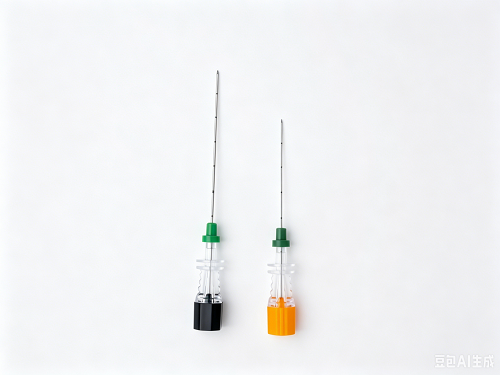
A puncture needle lets doctors reach blood vessels or tissues for medical reasons. You might use a puncture needle to take blood or put in an intravenous line.
Blood draw: You use a puncture needle to get blood samples.
Intravenous line: You use a puncture needle to help place a catheter for fluids or medicine.
Puncture needles are very important in tests and treatments. For example, doctors use thin puncture needles during CT-guided thoracic fine needle aspiration to get tissue from lung lumps. This helps find out about diseases in the central nervous system and can stop headaches after a lumbar puncture.
Using ultrasound makes puncture needle procedures more accurate and safer. Studies show ultrasound lowers problems by more than half and makes punctures over 25% more exact. You have fewer chances of hitting organs by mistake and get safer results.
Key Takeaways
Puncture needles are important for medical work like blood tests and IVs. They help doctors reach blood vessels and tissues safely.
Using ultrasound makes puncture needle procedures more accurate and safe. It helps lower problems and helps patients get better results.
There are different puncture needles, like hollow and solid ones. Each type has a special use. This helps doctors pick the best tool for each job.
Atraumatic puncture needles can help stop headaches and other problems. This is helpful after procedures like lumbar punctures.
You should always talk to your doctor about which puncture needle is best for you. This helps keep you safe and comfortable.
Types of puncture needles
When doctors do medical procedures, they use different puncture needles for each job. Each kind of puncture needle has special parts that help doctors do their work well. There are three main types: hollow puncture needle, solid puncture needle, and ultrasound-guided puncture needle.
Hollow puncture needle
The hollow puncture needle is used a lot in hospitals. It looks like a small tube. This lets doctors take out fluids or put medicine into the body. Doctors use it for lumbar puncture, blood draws, and spinal taps.
There are two main kinds of hollow puncture needle: traumatic (Quincke) and atraumatic (Whitacre or Sprotte). The Quincke needle has a sharp tip. It can go through tough layers and gives a “dura click” feeling when it is in the right spot. The atraumatic needle has a blunt tip and side holes. It moves the layers apart gently, so there is less chance of headaches after the procedure. Many doctors like the atraumatic type because it causes fewer problems for patients.
Here is a table that shows the good and bad sides of the hollow puncture needle:
Advantages of Hollow Puncture Needles | Limitations of Hollow Puncture Needles |
|---|---|
Lower chance of complications | Can get blocked by blood clots |
Shorter hospital stays for patients | Needs careful positioning for full drainage |
Minimally invasive, less pain | |
Easy to use at the bedside with local anesthesia | |
Good airtight drainage lowers infection risk |
The hollow puncture needle is used often in many hospital departments. It is safe, simple to use, and helps doctors get good results.
Solid puncture needle
The solid puncture needle does not have a hole in the middle. Doctors use this puncture needle when they do not need to take out fluids. Instead, it is used to touch tissues or make a path for other tools. This puncture needle is sharp and thin, so it goes in easily and does not hurt much.
Here is a table that explains what the solid puncture needle can do:
Characteristic/Application | Description |
|---|---|
Sharp, slender tip | Lets you insert the needle smoothly and easily |
Strong structure | Helps you puncture skin or membranes efficiently |
Bevel tip | Makes entry easier and reduces tissue damage |
Many sizes and gauges | Fits different patient needs and procedures |
Biocompatible materials | Prevents breakage and keeps patients safe |
Sterile packaging | Lowers the risk of infection |
Solid construction | Useful when you do not need to draw fluids |
Less likely to clog | Good for tissue stimulation or manipulation |
Smooth surface | Gives you better control during puncture |
Flexible and rigid | Can be used many times without bending or breaking |
Versatile | Works well in both therapy and diagnosis |
The Hybrid-J Shape Needle (HJSN) is a new puncture needle that makes things safer. It takes more force to hurt important tissues than regular cannula needles. Surgeons say the HJSN is easier and safer to use, so they like it for many jobs.
The solid puncture needle is used a lot when doctors need to be very careful and exact. It does not clog easily and is very strong, so it works well for many tasks.
Ultrasound-guided puncture needle
The ultrasound-guided puncture needle is a new kind of puncture needle that uses special technology. Doctors use this puncture needle when they need to see where the needle is going inside the body. With ultrasound, doctors can watch the needle move on a screen. This helps them not hit blood vessels or organs by mistake.
Here is a table that shows why many doctors pick the ultrasound-guided puncture needle:
Feature | Benefit Description |
|---|---|
Improved needle visualization | Lets you keep the needle tip in view, making your puncture more accurate |
Reduced procedure time | Helps you finish the puncture faster |
Increased patient safety | Lowers the risk of hitting nearby organs |
Higher success rates | Makes it more likely you will succeed on the first try |
The Disposable Ultrasound-guided Puncture Needles from ShineArk Medical are a good example of a new puncture needle. These needles can be seen all the way around, so doctors can watch the whole needle during the puncture. The needle is easy to see on the ultrasound screen. There are marks every 10mm, so doctors know how deep the needle is. The strong materials and special design make this new puncture needle safe and good for many procedures.
New puncture needles are now thinner, shaped for comfort, and cleaned better. Some new puncture needles have special coatings to stop tissue damage and help people heal faster.
Using imaging like ultrasound has made the new puncture needle much safer and more exact. More and more doctors are using these advanced tools.
When you use a new puncture needle with depth marks and ultrasound, you can find the right spot more easily. These features help you line up the needle with the picture on the screen, so you do not have to guess where the tip is. This makes the puncture more exact and lowers mistakes.
The ultrasound-guided puncture needle is not just a regular puncture needle. It is a new puncture needle that uses the latest technology for safer, faster, and more exact procedures.
Puncture needle applications in spinal procedures
Lumbar puncture and spinal tap
Lumbar puncture and spinal tap are common in hospitals. These procedures help doctors find and treat many health problems. A puncture needle is used to reach the space between the bones in your lower back. The lumbar puncture is usually done at the L3-L4 or L4-L5 area. This spot is below the spinal cord, so it is safer.
Doctors use a puncture needle to take out cerebrospinal fluid during these procedures. This fluid helps doctors check for infections, multiple sclerosis, or cancer. Sometimes, doctors remove fluid to lower high pressure in the brain. Lumbar puncture and spinal tap can also be used to put in contrast dye for pictures or give chemotherapy.
Doctors pick the right puncture needle for each job. Many choose noncutting pencil-point needles. These needles help stop headaches after the procedure. Sometimes, doctors use cutting beveled-tip needles for special reasons. Smaller needles, like 22-gauge, help lower problems.
The Quincke puncture needle has a sharp tip. It is used to go through the layers and reach the subarachnoid space. Doctors feel a “dura click” when the needle is in the right place. This feeling means it is time to collect cerebrospinal fluid. Atraumatic puncture needles have blunt tips. They help stop dural punctures and lower headaches. These needles also help prevent back pain, bloody taps, and nerve problems.
You see lumbar puncture and spinal tap used for:
Taking samples of cerebrospinal fluid
Removing fluid for treatment
Putting in contrast dye or medicine
Doctors must be careful and skilled when doing these procedures. They pick the best puncture needle for the job. They make sure to reach the right spot and keep the patient safe.
Safety and precision in spinal access
Doctors want to be safe and exact when using a puncture needle for lumbar puncture and spinal tap. They often use atraumatic pencil-point needles to lower the chance of headaches. These needles can cut down headaches by over 70% in people at risk. They also help stop bad back pain and nerve problems.
Doctors use well-made spinal puncture needles to avoid problems. Studies show these needles help get better results. Patients are put on their side to help stop headaches. Skilled doctors need fewer tries and use better methods, so there are fewer problems.
Doctors use ultrasound to make the procedure safer and more exact. Ultrasound gives live pictures of the spine. Doctors can see the bones, spinal cord, and spaces they need to reach. They can spot important parts and avoid mistakes. Advanced imaging helps doctors find the right spot for the needle. They get a wide view of the spine and can pick the best place to put the needle in.
Some systems, like Accuro, put graphics on the ultrasound screen. This helps doctors aim for the right space. They can see where the needle is going and fix mistakes. This way, they do not have to guess and can avoid risks.
Doctors use puncture needles with special tips that show up on ultrasound. These needles are easy to see on the screen. Depth marks help doctors know how far the needle goes in. This makes sure they reach the right spot and collect fluid safely.
Using ultrasound-guided puncture needles for lumbar puncture and spinal tap helps patients. There are fewer problems, more success, and patients feel better.
Doctors use puncture needles in spinal procedures to help diagnose, treat, and manage many health problems. They depend on safety, accuracy, and new technology to do their best work.
Ultrasound-guided paracentesis and clinical evidence
Advantages of ultrasound-guided puncture needle
A puncture needle can be used for both diagnostic paracentesis and therapeutic paracentesis. When doctors need to take fluid from the belly, ultrasound-guided paracentesis helps them find the safest spot. This way, doctors can see the fluid and stay away from organs. It lowers the chance of bleeding and infection. It also helps make sure doctors get the right fluid sample.
Here is a table that explains why ultrasound guidance is helpful for paracentesis:
Recommendation | Advantage |
|---|---|
Use ultrasound guidance for paracentesis | Makes serious problems like bleeding less likely. |
Use ultrasound guidance for paracentesis | Helps the procedure work better overall. |
Use ultrasound to assess fluid characteristics | Shows doctors where it is safe to do paracentesis. |
When doctors use a puncture needle with ultrasound, they can see the fluid pocket and pick the best spot for the puncture. They can avoid blood vessels and the bowel. This makes both diagnostic paracentesis and therapeutic paracentesis safer for everyone.
Clinical findings and patient outcomes
Studies show that ultrasound-guided paracentesis works better than the old way. Doctors have more success on the first try and there are fewer problems. In one study, doctors saw that ultrasound helped them choose the best place for the puncture needle. They did not do extra procedures if there was not enough fluid. They also needed fewer needle passes, and the first try worked more often.
Here is a table that compares the old way and the ultrasound-guided way for therapeutic paracentesis:
Aspect | Traditional Technique | Ultrasound-Guided Technique |
|---|---|---|
Safety | More chance of injury | Less chance of injury |
Accuracy | Not as good at picking the spot | Better at picking the spot |
Bleeding Risks | Higher | Lower |
Infection Risks | Higher | Lower |
Bowel Injury | Can happen | Stopped |
You can see that using an ultrasound-guided puncture needle for therapeutic paracentesis lowers the chance of bleeding and bowel injury. It also helps doctors remove fluid more exactly. The ShineArk Medical Disposable Ultrasound-guided Puncture Needles let doctors see the needle and fluid well. The depth marks and ultrasound view make the puncture more exact.
ShineArk Medical follows strict rules for safety and quality. The products are made in a very clean room and meet ISO13485 and European MDR standards. You can trust these puncture needles for both diagnostic paracentesis and therapeutic paracentesis.
When doctors use ultrasound-guided paracentesis, patients feel better and heal faster. It also makes sure fluid removal is safe and works well.
A puncture needle is very important in medical care. Picking the right puncture needle keeps patients safe and comfortable. New designs, like special tips and coatings, help lower pain and risks.
Key points you should know:
Puncture needle changes make procedures safer and more dependable.
The best puncture needle fits each patient and procedure.
Research adds new features to help you and your doctors.
You should always ask your doctor which puncture needle is best for you.
FAQ
What is the main purpose of a puncture needle?
A puncture needle helps doctors reach inside your body. It is used for tests or treatments. Doctors use it to take fluids or give medicine. It can also help with some medical procedures.
How does ultrasound help with puncture needles?
Ultrasound lets doctors see the needle inside your body. They can watch the needle move on a screen. This helps them avoid mistakes. It also makes the procedure safer for you.
Are there different sizes of puncture needles?
Puncture needles come in many sizes and lengths. Doctors choose the best size for your body and the procedure. ShineArk Medical has many different options to pick from.
Is a puncture needle safe to use?
Doctors use puncture needles that follow strict safety rules. Each needle is clean and used only once. Features like depth marks and ultrasound help keep you safe.