


How to Select the Right Peripheral Nerve Block Needle
You need to pick the right peripheral nerve block needle. The type of block, your patient's body, and the procedure matter. This choice keeps your patient safe. It helps the block work well. It also makes the experience better for your patient. New needle technology, like ultrasound-visible needles, helps a lot. Studies show that seeing the needle on ultrasound helps the block work and keeps it safe.
Picking the best needle can stop problems and make patients happier.
Study Title | Findings |
|---|---|
The Importance of Needle Echogenity in Ultrasound Guided Axillary Brachial Plexus Block | Using ultrasound helps doctors see nerves. This makes the block safer and work better. Echogenic needles are good for making the block easier, safer, and better. |
Photoacoustic needle improves needle tip visibility during deep peripheral nerve block | Seeing the needle during the procedure is very important. It helps make the block work well. People learning this skill may need more training. |
Key Takeaways
Pick the correct needle for each block. This helps keep things safe and works well.
Use needles that can be seen with ultrasound. This makes it easier to be accurate and lowers problems.
Think about how big the patient is and their body shape. This helps you choose the right needle length and gauge.
Echogenic needles are easier to see. They help you feel more sure during the procedure.
Make sure the needle’s features fit the situation. This gives the best results.
Why Peripheral Nerve Block Needle Selection Matters
Block Success and Safety
You want every nerve block to work well. You also want your patient to stay safe. The needle you pick is very important. The right needle is easier to see on ultrasound. This helps you put the needle close to the nerve. You do not have to touch the nerve. This lowers the chance of bleeding. It also makes the block work better. Many studies say a good needle gives better results for peripheral nerve blocks.
Evidence Type | Findings |
|---|---|
Study by Vassiliou et al. | Using both ultrasound and nerve stimulation helps place the needle close to the nerve. It also lowers the chance of hematoma. |
Review by Hocking et al. | An echogenic needle makes the procedure safer, easier, and more effective. |
Study by Guo et al. | Echogenic needles are easier to see than non-echogenic needles in cadaver models. |
Better peripheral nerve block needle visibility means better results. You can do peripheral nerve blocks with more confidence and accuracy.
Complications from Poor Choice
If you use the wrong needle, problems can happen. Some common problems are:
Infection at the injection spot or nearby tissues.
Allergic reactions to medicines or materials.
These problems can cause pain or slow healing. They can even cause long-term issues for your patient. You want to avoid these risks. Picking the right needle helps you stop problems. It also helps you give safe peripheral nerve blocks every time.
Key Factors in Peripheral Nerve Block Needle Choice
Block Location and Depth
You must think about where you will put the block. You also need to know how deep the nerve is under the skin. Some nerves are close to the surface. Others are much deeper inside the body. For deep blocks, you should use a longer needle. Shorter needles are good for nerves near the skin. The right length helps you reach the nerve without going too far. You want to avoid hitting blood vessels or other important parts. Picking the correct needle size for each spot makes the block safer and works better.
Patient Size and Anatomy
Every patient is unique. Body size and shape can change which needle you pick. A bigger patient may need a longer needle to reach the nerve. A smaller patient or child may need a shorter, thinner needle. You should check for any unusual body features. Sometimes, you cannot feel the usual spots on the body. In these cases, ultrasound helps you find the right place and measure the depth. Here are some ways ultrasound can help you:
You can see the spinous process and find the true middle.
You can pick the widest space between bones for easier needle use.
You can measure the exact depth from skin to the nerve.
You can spot hidden problems like scoliosis or surgical hardware.
Imaging Modality
How you see the needle and nerve is very important. Most doctors use ultrasound to guide the block. Ultrasound lets you see the needle and nerve as you work. This makes the block safer and faster. You use less medicine for blocks near the skin because you can place the needle better. If you use nerve stimulation, you may need an insulated needle. For ultrasound, echogenic needles are best because you can see them clearly.
Evidence Type | Description |
|---|---|
Ultrasound Guidance | Helps you see better, lowers risks, and makes needle placement easier. |
Nerve Stimulation | Used to find nerves, now often used with ultrasound to lower risks. |
Needle Types | Insulated needles are used with nerve stimulation; echogenic needles are best for ultrasound. |
There are many kinds of peripheral nerve block needles you can buy. Insulated needles are often used with nerve stimulation. With ultrasound, echogenic needles are used more for better seeing.
When you match the needle to the way you see, you make the block safer and more successful.
Peripheral Nerve Block Needle Features
Gauge and Length
You have to pick the right gauge and length for your needle. Gauge is how thick the needle is. Length is how long the needle is. Both are important for safety and success. For single-shot blocks, use a 21–25G needle. This size gives you good control and less pain. For continuous blocks, use an 18G Tuohy needle. This needle lets you put in a catheter for longer pain relief.
Peripheral Nerve Block Needle size depends on where the block goes and your patient’s body. A deeper block needs a longer needle. A thinner patient or a child needs a shorter needle. You want to reach the nerve but not go too far. Picking the right size helps you avoid problems and makes the block work better.
Gauge (G) | Use Case | Advantages |
|---|---|---|
21–25G | Single-shot blocks | Less pain, good control |
18G Tuohy | Continuous blocks | Catheter placement, safe |
Tip: Always check how deep the nerve is with ultrasound before you pick your needle.
Tip Design and Bevel
The tip and bevel of your needle change how easy and safe the block is. The bevel is the slanted part at the end of the needle. Different bevels change how the needle moves through tissue and how much pain your patient feels.
Needle Bevel Type | Pain Perception | Soft Tissue Trauma | Insertion Force |
|---|---|---|---|
Scalpel-designed | Lower pain levels | Incises without tearing | Less force needed |
Triple bevel | Higher pain levels | More tissue trauma | More force needed |
Low-angle bevel | Lower pain levels | Less trauma | N/A |
You want a needle that slides easily and does not hurt your patient. Blunt needles have a rounded tip. This design lowers the risk of nerve or vessel injury. You should look for a needle made for safety and precision.
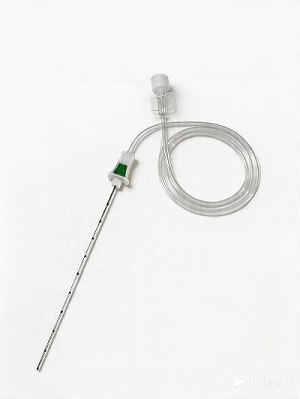
ShineArk Medical’s Ultrasound-visible Puncture Needles for Nerve Block use a bilateral back bevel tip. This special tip helps you move through tissue with less resistance. It also lowers the risk of nerve damage. The AN-N/AN-M series gives you smooth movement and better control.
Echogenicity and Visibility
You need to see your needle clearly during an ultrasound-guided block. Echogenicity means how well the needle shows up on ultrasound. A needle with high echogenicity is easy to see. This helps you put the needle close to the nerve without touching it.
Studies show that echogenic needles make blocks safer and faster. Hocking and Guo found these needles are easier to see than regular ones. Hebard said doctors feel more confident when they can see the needle tip. Hovgesen also showed that echogenic needles help doctors see better.
Study | Findings |
|---|---|
Hocking et al. | Echogenic needles increase efficacy, safety, and simplicity. |
Guo et al. | Echogenic needles are more visible than non-echogenic needles. |
Hebard et al. | Higher confidence scores for echogenic needles at different angles. |
ShineArk Medical’s AN-N/AN-M series Peripheral Nerve Block Needle stands out for visibility. These needles have 360° visibility and a 4x4 array of micro-reflective surfaces. You can see the tip from any angle. The strong echogenicity means you always know where your needle is. This feature lowers the risk of problems and helps you finish the block faster.
Feature | ShineArk Needles | Standard Needles |
|---|---|---|
Visibility | High-contrast, strong echogenicity | Weak echogenicity |
Precision | High-brightness tip tracking | Hard to see tissue layers |
Safety | Precise positioning next to nerve target | Higher risk of nerve injury |
Onset Time | Shortens onset time | Longer onset time |
Complication Risk | Reduces risk | Higher risk |
Note: Using an echogenic peripheral nerve block needle can make the procedure faster and less painful for your patient.
You should always match your needle features to what you need for your patient. Advanced needles like the ShineArk AN-N/AN-M series help you work with more safety and accuracy.
Matching Needle to Clinical Scenario
You need to pick your needle based on how deep the block is. Superficial blocks are for nerves close to the skin. Deep blocks are for nerves that are deeper in the body. You should think about where the nerve is and how big it is. For nerves near the skin, use a short needle. For deep nerves, use a long needle.
The ultrasound-guided superficial peroneal nerve block is in a different spot than the landmark-guided injection.
The nerve is smaller at the landmark-guided spot, so it is hard to see with ultrasound.
The nerve is bigger at the ultrasound-guided spot, but it can move around.
You should use ultrasound to find the nerve and pick the right needle length. Echogenic needles help you see the tip during the block. You can stop problems by matching the needle to the block depth. Always check where the nerve is before you pick your needle.
Tip: Use a long needle for deep blocks and a short needle for superficial blocks. This helps you reach the nerve without hurting other tissue.
Pediatric vs. Adult Patients
You need to change your plan for kids and adults. Kids have smaller bodies and thinner tissue. Adults have bigger bodies and deeper nerves. You need to pick the right needle size for each group.
Kids often need general anesthesia so they do not move during the block.
Adults can get nerve blocks without general anesthesia more often.
You should use a thin needle for kids. This makes it hurt less and lowers the chance of injury. For adults, use a thicker needle to reach deep nerves. Always check the patient’s body before you pick your needle.
Note: Kids need extra care. You must keep them safe and comfortable during the block.
Common Blocks and Recommended Sizes
You do many types of peripheral nerve blocks. Each block needs a certain needle size and tip shape. You should know which needle is best for each block.
For brachial plexus blocks, use a 22G blunt tip block needle.
For popliteal sciatic blocks, use a 20G Touhy needle with a blunt tip.
For femoral blocks, use a 20G Touhy needle with a blunt tip.
For sciatic nerve blocks, use a 10-cm long, short-bevel, insulated stimulating needle. For the front approach, use a 15-cm needle.
You should think about how the needle feels and how stiff it is. Big needles can hurt more tissue. Small needles can go into the wrong spot. You need to balance these things for continuous nerve blocks.
Long needles can bend more, which makes deep blocks harder.
Echogenic needles are easier to see with ultrasound and help you put the needle in the right place.
You should think about each patient’s body and needs.
Patients with high risks need extra safety steps. You should use both ultrasound and nerve stimulation to guide the needle. This lowers problems and makes it safer. You can also use other ways, like checking injection pressure and asking the patient about pain or tingling. This is important for older or complex patients.
Callout: Always match your needle to the clinical situation. You make the block safer and more exact when you pick the right needle for each block.
You must use the right nerve block needle for each patient and block type. You get better results and lower risks when you follow the rules and change your plan for each case.
Practical Tips and Pitfalls
Avoiding Complications
You want your patients to stay safe during nerve blocks. Picking the right needle and using good technique helps stop problems. Here are some important tips:
Use short-bevel needles. These make it less likely to poke the nerve fascicle.
Pick smaller-gauge needles. These lower the chance of bad nerve damage.
Choose echogenic needles. You can see them better with ultrasound, so you finish faster and safer.
Go toward the nerve at a shallow angle. This way lowers the risk of poking the nerve.
Do not inject if you feel high opening pressure. This might mean you are inside the nerve.
Try to use fewer needle passes. Fewer passes mean less harm.
Never hurt the nerves on purpose. Do not inject right into the nerve.
Use ultrasound, nerve stimulation, or both. These tools help you notice needle-nerve contact early.
Tip: Using both ultrasound and nerve stimulation is safest.
Adapting to Challenges
Every patient and procedure can be different. You might see tricky body shapes, nervous patients, or nerves that are hard to see. Be ready to change your plan if you need to. If you cannot see the nerve well, move the probe or add more gel. For patients who move a lot, explain what you are doing and use gentle hands. If you feel resistance, stop and check where your needle tip is. Always trust what you see and feel.
Challenge | Solution |
|---|---|
Poor visibility | Use echogenic needles |
Patient movement | Communicate and reassure |
Unusual anatomy | Adjust probe and needle angle |
Needle Selection Checklist
Check this list before you start to make sure you have the right needle:
Did you pick the right gauge and length for the block depth?
Did you choose a needle that is easy to see with ultrasound?
Did you pick a safe bevel type?
Did you plan the angle you will use?
Did you get your ultrasound or nerve stimulation tools ready?
Did you look at the patient’s body and think about risks?
Remember: Picking the right needle and using good technique keeps your patients safe and helps your blocks work well.
You must pick the right peripheral nerve block needle for every patient. Look at what kind of block you will do. Think about the patient’s body and what the procedure needs. Some needles have special features that help you see them better. These features can make the procedure safer. There are rules that tell you how to do peripheral nerve blocks step by step.
Before you begin, use this checklist:
Check how deep and where the block will go.
Choose the right thickness and length for your needle.
Pick a needle that is easy to see.
Follow the steps in the clinical guidelines for nerve blocks.
FAQ
What gauge needle should you use for a single-shot nerve block?
You should use a 21–25G needle for single-shot blocks. This size gives you good control and causes less pain. Always check the block depth before you pick your needle.
How does echogenicity help during ultrasound-guided nerve blocks?
Echogenic needles show up clearly on ultrasound. You can see the tip from any angle. This helps you place the needle safely and quickly. You lower the risk of nerve injury.
Why is tip design important for nerve block needles?
Tip design affects how the needle moves through tissue. A bilateral back bevel tip slides smoothly and lowers the risk of nerve damage. You get better control and safer blocks.
What features make ShineArk Medical’s needles stand out?
ShineArk Medical’s needles offer 360° visibility, micro-reflective surfaces, and a bilateral back bevel tip. You get precise positioning and strong echogenicity. These features help you work safely and accurately.
Please Contact Us!
Recent News
1.What's a Nerve Block Needle, and How Does It Work?
2026-06-082.Ultimate Guide to Ultrasound-Guided Nerve Block Needles: Safe, Precise, and Disposable Solutions
2026-05-293.Why choose ultrasound guided puncture needle for regional anesthesia
2026-06-024.The Important Role Of Ultrasound-Guided Nerve Block
2026-04-02