



What Is the Use of Puncture Needles?
In modern medical procedures, precision is everything. One small tool often determines whether a procedure is safe, accurate, and successful—the puncture needles. But many people still ask a simple and important question: What is the use of puncture needle?
In clinical practice, puncture needles are used for targeted access into tissues, vessels, or specific anatomical structures with high accuracy and minimal trauma. They play a critical role in anesthesia, pain management, diagnostics, and ultrasound-guided interventions.
Key Takeaways
Puncture needles are medical tools used to access tissues, vessels, or nerve regions safely and precisely.
They are widely used in regional anesthesia, biopsy procedures, and ultrasound-guided interventions.
Modern puncture needles improve safety, visibility, and procedural accuracy.
Ultrasound-guided puncture needles reduce complications and improve success rates.
Different designs serve different clinical needs, from nerve blocks to fluid aspiration.
High-quality manufacturing ensures consistent performance and patient safety.
Introduction: Why Puncture Needles Are Essential in Modern Medicine
Medical procedures today demand high precision and minimal invasiveness. This is where puncture needles become essential tools.
A puncture needle is designed to enter the body in a controlled way, allowing doctors to reach specific targets such as nerves, blood vessels, fluid collections, or tissue structures.
Unlike general injection needles, puncture needles are engineered for:
Controlled depth access
Enhanced safety
Better imaging visibility
Reduced tissue damage
Because of these advantages, puncture needles are now widely used across multiple medical specialties.
What Is the Use of Puncture Needles in Clinical Practice?
The primary use of puncture needles is to provide safe and precise access to internal structures for diagnostic or therapeutic purposes.
They are commonly used in:
Regional anesthesia (nerve blocks)
Ultrasound-guided interventions
Fluid aspiration procedures
Tissue sampling and biopsy
Pain management treatments
Each use case requires different puncture needle designs, but the core principle remains the same: precision and safety.
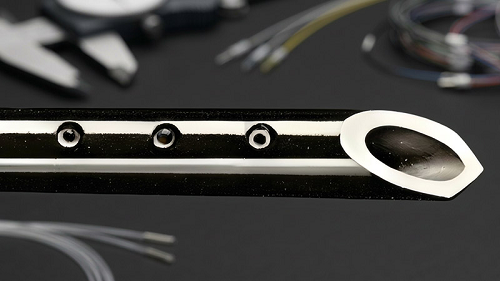
Main Clinical Applications of Puncture Needles
Below is a structured overview of how puncture needles are used in modern healthcare:
| Application Area | Purpose | Clinical Benefit |
|---|---|---|
| Regional anesthesia | Deliver anesthetic near nerves | Pain control during surgery |
| Ultrasound-guided procedures | Real-time guided access | Higher accuracy and safety |
| Biopsy procedures | Tissue sampling | Early disease diagnosis |
| Fluid aspiration | Remove fluid from body cavities | Symptom relief and diagnosis |
| Pain therapy | Targeted injections | Long-term pain management |
Each application depends on the design and quality of the puncture needles used.
How Puncture Needles Work in Medical Procedures
The working principle of puncture needles is simple but highly precise.
The needle is inserted through the skin.
It is guided toward a target structure using anatomical landmarks or ultrasound.
The clinician carefully advances the needle tip.
Medication, fluid, or a sample is delivered or collected.
Modern puncture needles are designed to give clinicians better control during every step of this process.
Why Ultrasound-Guided Puncture Needles Are Important
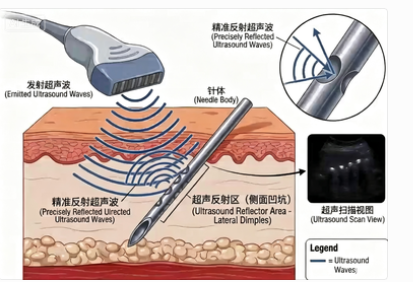
Ultrasound guidance has significantly improved the safety of medical procedures. However, its effectiveness depends heavily on the visibility of the needle.
Specialized ultrasound-guided puncture needles offer:
Enhanced echogenic surface for better visibility
Real-time tracking under ultrasound imaging
Improved tip control during insertion
Reduced risk of accidental tissue injury
These features are especially important in nerve block and vascular procedures.
Types of Puncture Needles and Their Uses
Different clinical scenarios require different puncture needle designs.
| Type of Puncture Needle | Design Feature | Typical Use |
|---|---|---|
| Standard puncture needle | Basic sharp tip | General access procedures |
| Echogenic puncture needle | Ultrasound visibility enhancement | Imaging-guided procedures |
| Disposable puncture needle | Single-use sterile design | Infection control applications |
| Fine puncture needle | Smaller diameter | Sensitive tissue access |
| Long puncture needle | Extended length | Deep tissue or nerve access |
Each type of puncture needles serves a specific medical function depending on procedural requirements.
Key Advantages of Using Puncture Needles
Modern puncture needle design brings several important benefits to healthcare providers:
1. High Precision Access
Allows accurate targeting of nerves, vessels, or lesions.
2. Improved Patient Safety
Reduces complications and tissue trauma.
3. Better Imaging Compatibility
Especially important in ultrasound-guided procedures.
4. Reduced Procedure Time
Faster and more efficient interventions.
5. Lower Infection Risk
Disposable puncture needles improve sterility control.
Technical Features of Modern Puncture Needles
A high-quality puncture needles product typically includes the following features:
| Feature | Function | Clinical Value |
|---|---|---|
| Echogenic coating | Enhances ultrasound reflection | Better visibility |
| Sharp beveled tip | Smooth tissue penetration | Reduced pain and trauma |
| Medical-grade stainless steel | Strength and flexibility | Reliable performance |
| Depth marking | Insertion control | Improved accuracy |
| Disposable design | Single-use safety | Infection prevention |
These features ensure puncture needles perform consistently in clinical environments.
Role of Puncture Needles in Ultrasound-Guided Nerve Blocks
One of the most important uses of puncture needles is in regional anesthesia.
During nerve block procedures, puncture needles are used to deliver anesthetic near targeted nerves under ultrasound guidance. This requires:
High precision needle control
Clear ultrasound visibility
Smooth and safe insertion
A well-designed puncture needle improves block success rates and reduces complications.
How to Choose the Right Puncture Needle
Selecting the correct puncture needles depends on several factors:
Type of procedure
Depth of target tissue
Imaging method used
Required needle diameter
Patient-specific anatomy
For ultrasound-guided procedures, echogenic puncture needles are typically preferred.
How ShineArk Supports Medical Puncture Needle Solutions
In the field of medical device manufacturing, quality and consistency are essential. ShineArk focuses on developing advanced puncture needle solutions designed for modern clinical needs.
ShineArk’s product line includes:
These products are designed to improve procedural accuracy and support safer medical outcomes.
Clinical Workflow Using Puncture Needles
A typical procedure using puncture needles follows these steps:
Patient positioning
Sterilization of the procedure area
Ultrasound imaging to locate target
Needle insertion
Real-time adjustment under imaging
Delivery of medication or sampling
Needle removal and post-care
Each step depends on the precision of the puncture needles used.
Frequently Asked Questions (FAQ)
1. What is the main use of puncture needles?
They are used to access internal tissues or structures for treatment, diagnosis, or drug delivery.
2. Are puncture needles the same as injection needles?
No. Puncture needles are designed for deeper, more precise clinical procedures.
3. Why are puncture needles used in ultrasound procedures?
They provide better visibility and allow real-time guidance during insertion.
4. What procedures use puncture needles most often?
They are commonly used in nerve blocks, biopsies, and fluid aspiration.
5. Are disposable puncture needles safer?
Yes. Disposable designs reduce infection risks and ensure sterility.
6. What makes a good puncture needle?
Sharpness, echogenic design, medical-grade material, and controlled flexibility.
7. What does ShineArk produce in this category?
ShineArk provides ultrasound-visible and disposable puncture needle solutions for clinical use.
Conclusion
The use of puncture needles is fundamental in modern medicine, enabling safe, precise, and minimally invasive access to internal structures. From anesthesia to diagnostic procedures, they improve both clinical efficiency and patient outcomes.
As medical technology continues to evolve, high-quality puncture needles will remain essential tools in achieving safer and more accurate procedures. Manufacturers like ShineArk are contributing to this progress by developing advanced solutions tailored for ultrasound-guided and clinical applications.
Please Contact Us!
Recent News
1.Pulse Pressure Tourniquet or Traditional Tourniquet Which Helps More
2026-06-192.What is a puncture needle?
2026-06-263.How to Select the Right Peripheral Nerve Block Needle
2026-06-124.What's a Nerve Block Needle, and How Does It Work?
2026-06-085.Ultimate Guide to Ultrasound-Guided Nerve Block Needles: Safe, Precise, and Disposable Solutions
2026-05-296.Why choose ultrasound guided puncture needle for regional anesthesia
2026-06-027.The Important Role Of Ultrasound-Guided Nerve Block
2026-04-028.What Kind of Needle Is Used for a Peripheral Nerve Block?
2026-06-29