



What Size Needle for Femoral Nerve Block?
Choosing the correct needle size for a femoral nerve block is one of the most important factors influencing procedural success, patient safety, and comfort. Clinicians often ask a simple but critical question: what size needle for femoral nerve block?
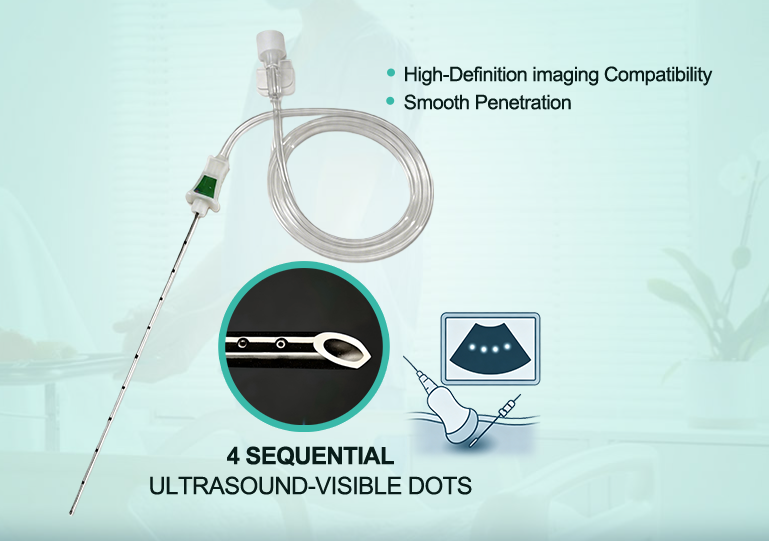
In regional anesthesia, especially ultrasound-guided procedures, the femoral nerve block needle must balance precision, visibility, and tissue compatibility. A poorly selected needle size can lead to inadequate nerve targeting, increased procedure time, or unnecessary patient discomfort.
This guide is designed to provide a clear, practical, and clinically reliable explanation of needle sizing, selection principles, and real-world usage scenarios. It also integrates manufacturing insights from ShineArk, a professional provider of ultrasound-visible puncture solutions for regional anesthesia.
Key Takeaways
The most commonly used femoral nerve block needle sizes are 22G to 25G
Length typically ranges from 50 mm to 150 mm depending on patient body type
Ultrasound visibility and bevel design are more important than diameter alone
22G femoral nerve block needle is often preferred for balance between stiffness and patient comfort
Needle selection depends on depth of femoral nerve and procedural approach
Short bevel and echogenic tips improve accuracy and safety
Manufacturer quality directly affects procedural consistency and visibility
Understanding the Femoral Nerve Block Needle
A femoral nerve block needle is a specialized regional anesthesia needle designed to deliver local anesthetic near the femoral nerve under ultrasound or nerve stimulator guidance.
Its main requirements include:
High ultrasound visibility
Controlled flexibility (to avoid nerve injury)
Smooth tissue penetration
Accurate drug delivery at nerve sheath level
Unlike standard hypodermic needles, a femoral nerve block needle must maintain trajectory stability even at deeper anatomical levels.
What Size Needle for Femoral Nerve Block?
The most commonly accepted answer to what size needle for femoral nerve block is:
Standard Clinical Range
22G femoral nerve block needle (0.7 mm diameter) → Most widely used
23G–25G femoral nerve block needle → Pediatric or highly sensitive patients
20G femoral nerve block needle → Deep blocks or obese patients requiring extra rigidity
Standard Length Range
50–80 mm → Lean adults or superficial nerve location
80–100 mm → Most standard femoral nerve block procedures
100–150 mm → Obese patients or deeper anatomical positioning
Why 22G is Most Common
A 22G femoral nerve block needle provides:
Optimal balance between rigidity and flexibility
Better ultrasound traceability
Reduced deflection during insertion
Lower risk of vascular puncture when used correctly
This is why many clinicians prefer it as the default size when deciding what size needle for femoral nerve block procedures.
Factors That Influence Needle Size Selection
1. Patient Body Composition
Slim patients → shorter and thinner needle (23G–25G femoral nerve block needle)
Average adults → 22G femoral nerve block needle standard
Obese patients → longer 22G or 20G for depth control
2. Depth of Femoral Nerve
The femoral nerve is typically located beneath the fascia iliaca, but depth varies:
Superficial anatomy: 2–4 cm
Average anatomy: 4–6 cm
Deep anatomy: 6–10 cm
Deeper placement requires longer femoral nerve block needle options.
3. Imaging Guidance Method
Ultrasound-guided → requires echogenic needle tip
Nerve stimulator-guided → requires stable conductive path
Ultrasound guidance is now the gold standard, making visibility more important than diameter alone.
4. Procedure Environment
Operating room → standard 22G femoral nerve block needles
Emergency settings → slightly thicker needle for speed and control
Teaching hospitals → 22G femoral nerve block needle preferred for safety balance
Comparison Table: Femoral Nerve Block Needle Sizes
| Gauge | Diameter | Common Length | Best Use Case | Advantages | Limitations |
|---|---|---|---|---|---|
| 20G femoral nerve block needle | 0.9 mm | 80–150 mm | Deep blocks | High stiffness, good control | Slightly more discomfort |
| 22G femoral nerve block needle | 0.7 mm | 50–120 mm | Standard femoral nerve block | Balanced performance | Not ideal for extremely deep anatomy |
| 23G femoral nerve block needle | 0.6 mm | 50–100 mm | Sensitive patients | Less painful insertion | Less rigid |
| 25G femoral nerve block needle | 0.5 mm | 40–80 mm | Pediatric use | Maximum comfort | Difficult depth control |
This table helps answer the clinical question of what size needle for femoral nerve block in a practical, decision-oriented way.
Why Needle Design Matters as Much as Size
Even when the correct femoral nerve block needle size is chosen, design factors strongly influence outcomes:
Echogenic Tip Design
Improves ultrasound reflection and visibility.
Short Bevel Design
Reduces tissue trauma and improves control.
Flexible Shaft
Prevents accidental nerve contact while maintaining directional accuracy.
Surface Coating
Reduces insertion resistance and improves smooth advancement.
Manufacturing precision plays a critical role in all of these features.
How Needle Size Impacts Procedure Success
Step-by-step overview:
Ultrasound scanning identifies femoral nerve position
Needle size is selected based on depth estimation
Femoral nerve block needle is inserted at lateral approach
Real-time imaging confirms needle trajectory
Local anesthetic is administered around nerve sheath
If the needle is too thin → it may bend
If too thick → patient discomfort increases
If too short → nerve cannot be reached
This is why selecting the correct size is essential.
Why Quality Consistency Matters
High-quality production ensures:
Consistent gauge diameter accuracy
Reliable ultrasound visibility
Smooth bevel finishing
Sterile packaging integrity
ShineArk focuses on producing ultrasound-visible puncture needles designed specifically for nerve block procedures, including femoral nerve block needle systems. Their designs emphasize visibility, stability, and procedural safety in clinical environments.
Common Mistakes in Choosing Femoral Nerve Block Needle Size
Choosing too thin a needle for deep anatomy
Ignoring ultrasound visibility requirements
Using excessively long needles for shallow patients
Prioritizing comfort over control in complex cases
Not adjusting size for BMI differences
Avoiding these mistakes significantly improves block success rates.
FAQ: Femoral Nerve Block Needle Size Questions
1. What size needle for femoral nerve block is most commonly used?
Most clinicians use a 22G femoral nerve block needle as the standard choice.
2. Can a 25G needle be used for femoral nerve block?
Yes, but 25g femoral nerve block needle is mainly used for pediatric or very superficial cases due to lower rigidity.
3. What length femoral nerve block needle is best?
Typically 80–120 mm, depending on patient anatomy and depth.
4. Is a thicker needle better for femoral nerve block?
Not always. Thicker needles improve control but may increase discomfort.
5. Why is 22G femoral nerve block needlepreferred for femoral nerve block needle procedures?
Because 22g femoral nerve block needle balances stiffness, visibility, and patient comfort effectively.
6. Does ultrasound affect needle size choice?
Yes. Ultrasound-guided procedures often favor echogenic 22G needles.
7. Can needle size affect block success rate?
Yes, incorrect sizing can lead to poor positioning or difficulty reaching the nerve.
Conclusion
Understanding what size needle for femoral nerve block is essential for achieving safe, efficient, and accurate regional anesthesia. While 22G remains the most widely used femoral nerve block needle size, the ideal choice depends on patient anatomy, depth, and imaging method.
By combining proper sizing with high-quality design features such as echogenic tips and controlled flexibility, clinicians can significantly improve procedural outcomes.
Please Contact Us!
Recent News
1.What Kind of Needle Is Used for a Peripheral Nerve Block?
2026-06-292.What Is the Use of Puncture Needles?
2026-06-293.Pulse Pressure Tourniquet or Traditional Tourniquet Which Helps More
2026-06-194.What is a puncture needle?
2026-06-265.How to Select the Right Peripheral Nerve Block Needle
2026-06-126.What's a Nerve Block Needle, and How Does It Work?
2026-06-087.Ultimate Guide to Ultrasound-Guided Nerve Block Needles: Safe, Precise, and Disposable Solutions
2026-05-298.Why choose ultrasound guided puncture needle for regional anesthesia
2026-06-029.The Important Role Of Ultrasound-Guided Nerve Block
2026-04-02