



What Is an Echogenic Needle for Ultrasound Guided Nerve Blocks?
In modern regional anesthesia, accurate needle visualization is essential for safe and effective nerve block procedures. An Echogenic Needle is a specially designed medical needle that improves visibility under ultrasound imaging, allowing anesthesiologists to clearly identify the needle shaft and tip during insertion.
Unlike conventional needles, which may become difficult to track when the ultrasound beam angle changes, an echogenic needle incorporates advanced surface technologies to enhance ultrasound signal reflection. This improved visibility helps clinicians achieve more accurate needle positioning and better control during ultrasound-guided procedures.
For peripheral nerve blocks, echogenic nerve block needles have become an important solution for improving procedural accuracy. By combining optimized needle design with enhanced ultrasound visibility, these needles support precise nerve targeting in applications such as brachial plexus block, femoral nerve block and other regional anesthesia procedures.
Key Takeaways
An Echogenic Needle is designed to improve needle visibility during ultrasound-guided procedures.
Echogenic nerve block needles help anesthesiologists achieve more accurate needle placement during peripheral nerve blocks.
An echogenic puncture needle uses specialized surface structures to enhance ultrasound reflection.
Echogenic block needles improve real-time needle tip visualization and procedural confidence.
Choosing the right echogenic needle depends on ultrasound visibility, needle design, material quality and clinical application.
What Is an Echogenic Needle?
An Echogenic Needle is a medical needle engineered to reflect more ultrasound waves back to the ultrasound transducer, creating a clearer image during ultrasound-guided procedures.
In traditional needles, ultrasound visibility can be affected by several factors, including insertion angle, tissue depth and needle orientation. When the needle surface does not reflect enough ultrasound energy, the needle may appear unclear on the ultrasound screen, increasing the difficulty of precise positioning.
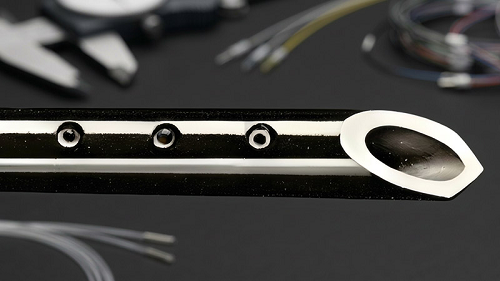
An echogenic needle solves this challenge through specially designed surface structures, including micro-patterns, reflective surfaces or enhanced needle tip designs. These technologies improve acoustic reflection and make the needle easier to visualize in real time.
In ultrasound guided nerve blocks, the improved visibility of an echogenic needle allows clinicians to better monitor needle advancement, identify the needle tip position and accurately deliver local anesthetic near the target nerve.
How Does an Echogenic Needle Work?
The working principle of an Echogenic Needle is based on ultrasound reflection.
During an ultrasound-guided nerve block procedure, the ultrasound probe sends sound waves into the body. When these waves reach the needle surface, they are reflected back to the probe and converted into an image.
A standard needle may provide limited reflection depending on its angle relative to the ultrasound beam. An echogenic needle improves this process by using advanced surface structures that create stronger and more consistent reflections.
Key technologies commonly used in echogenic needles include:
Micro-reflective surface structures
Laser-engraved patterns
Optimized needle tip designs
Enhanced acoustic reflection technology
These features allow echogenic nerve block needles to maintain better visibility from different insertion angles, supporting accurate needle placement during regional anesthesia procedures.
What Makes Echogenic Nerve Block Needles Different?
1. Enhanced Ultrasound Visibility
The most important advantage of echogenic nerve block needles is improved visualization under ultrasound imaging.
During peripheral nerve block procedures, anesthesiologists need to identify the needle path and tip position while navigating around sensitive anatomical structures. Enhanced ultrasound visibility helps provide clearer imaging feedback throughout the procedure.
Compared with standard needles, an echogenic block needle offers:
Improved needle shaft visibility
Clearer needle tip identification
Better real-time monitoring
Increased procedural confidence
2. Improved Needle Tip Visualization
Accurate needle tip positioning is critical in ultrasound-guided nerve blocks.
An Echogenic Needle is designed to improve the visibility of the needle tip, helping clinicians distinguish the needle from surrounding tissues. This is especially important when performing deeper nerve blocks or procedures involving complex anatomical structures.
Better needle tip visualization supports:
More precise nerve targeting
Improved injection control
Reduced unnecessary needle movement
3. Better Control During Regional Anesthesia
Regional anesthesia requires precise placement of the needle near targeted nerves.
With enhanced visibility and improved positioning accuracy, echogenic block needles provide better control during procedures such as:
Peripheral nerve blocks
Brachial plexus blocks
Femoral nerve blocks
Sciatic nerve blocks
These advantages make echogenic needles a preferred choice for many ultrasound-guided anesthesia applications.
Echogenic Needle vs Standard Needle: What Is the Difference?
| Feature | Echogenic Needle | Standard Needle |
|---|---|---|
| Ultrasound visibility | Enhanced visibility | Limited visibility depending on angle |
| Needle tip identification | Clearer visualization | More difficult tracking |
| Ultrasound-guided procedures | Designed for precise guidance | Requires more clinical experience |
| Peripheral nerve block applications | Excellent suitability | Less optimized |
The main difference between an echogenic needle and a standard needle is the ability to reflect ultrasound signals more effectively. This allows clinicians to visualize the needle more clearly during real-time procedures.
Applications of Echogenic Nerve Block Needles
Brachial Plexus Block
Brachial plexus block is one of the most common applications for echogenic nerve block needles.
Because the nerves and surrounding structures can be complex, clear needle visualization helps anesthesiologists accurately position the needle during upper limb anesthesia procedures.
Femoral Nerve Block
For femoral nerve block procedures, accurate needle placement is important for effective anesthesia delivery.
An echogenic puncture needle improves ultrasound visibility, allowing better control when approaching the target nerve.
Sciatic Nerve Block
Sciatic nerve blocks often involve deeper anatomical locations where visualization can be challenging.
An echogenic block needle provides enhanced imaging performance, supporting precise needle advancement during these procedures.
What Is an Echogenic Puncture Needle?
An echogenic puncture needle is a specialized puncture needle designed for improved visualization under ultrasound guidance.
Unlike conventional puncture needles, echogenic puncture needles incorporate surface technologies that enhance ultrasound reflection. This allows healthcare professionals to monitor needle movement more accurately during minimally invasive procedures.
Common applications include:
Ultrasound-guided nerve blocks
Regional anesthesia
Pain management procedures
Targeted injections
For clinicians who require precise needle control, an echogenic puncture needle provides improved visibility and operational confidence.
How to Choose the Right Echogenic Needle?
Choosing the right Echogenic Needle requires consideration of several factors.
1. Ultrasound Visibility Performance
A high-quality echogenic needle should provide consistent visibility under different ultrasound scanning angles.
Clear visualization of the needle shaft and tip helps support accurate positioning during clinical procedures.
2. Needle Tip Design
Needle tip geometry directly affects insertion performance and tissue interaction.
An optimized needle tip design can provide:
Smooth penetration
Better directional control
Improved procedural accuracy
3. Material and Manufacturing Quality
Medical-grade materials and precision manufacturing are essential for reliable nerve block needles.
Important factors include:
Stainless steel quality
Needle strength and flexibility
Sterilization standards
Manufacturing consistency
Why Are Echogenic Needles Important in Regional Anesthesia?
The success of regional anesthesia depends heavily on accurate needle placement.
During ultrasound-guided nerve blocks, clinicians must identify the target nerve, advance the needle safely and deliver anesthetic precisely.
Echogenic nerve block needles improve this process by providing:
Enhanced ultrasound visibility
Better needle tip tracking
More accurate positioning
Improved procedural confidence
As ultrasound-guided anesthesia continues to develop, echogenic needles are becoming an increasingly important tool for modern nerve block procedures.
ShineArk Echogenic Nerve Block Needles for Ultrasound Guided Procedures
ShineArk develops advanced echogenic nerve block needles designed for ultrasound-guided regional anesthesia applications.
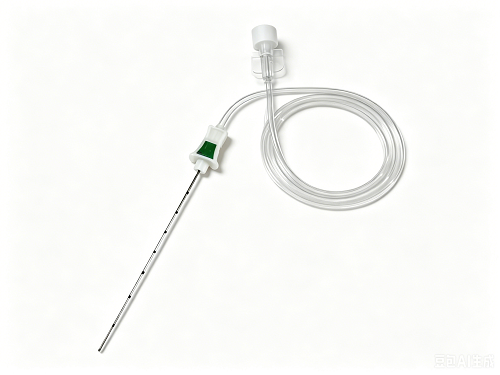
The AN-N/AN-M Series Ultrasound Guided Nerve Block Needles combine precision manufacturing, optimized needle design and enhanced ultrasound visibility to support accurate peripheral nerve block procedures.
Key features include:
Advanced Echogenic Needle Technology
The precision laser-engraved micro-reflective surface enhances ultrasound reflection, improving needle tip visualization during ultrasound-guided procedures.
Optimized Needle Design
The bilateral back bevel design helps separate tissue fibers smoothly, providing better insertion control and accurate positioning.
Reliable Medical-Grade Materials
High-quality stainless steel construction provides excellent flexibility, strength and durability for consistent clinical performance.
With advanced manufacturing capabilities and strict quality control, ShineArk provides reliable echogenic block needles and ultrasound-guided needle solutions for hospitals, clinics and medical device distributors worldwide.
Frequently Asked Questions
What is an echogenic needle?
An echogenic needle is a medical needle designed to improve ultrasound visibility by enhancing ultrasound signal reflection, allowing clearer visualization during ultrasound-guided procedures.
What are echogenic nerve block needles used for?
Echogenic nerve block needles are mainly used for peripheral nerve blocks and regional anesthesia procedures where accurate needle positioning is required.
What is the difference between an echogenic needle and a normal needle?
The main difference is ultrasound visibility. An echogenic needle has specialized surface features that improve ultrasound reflection and make the needle easier to identify during procedures.
What is an echogenic puncture needle?
An echogenic puncture needle is a puncture needle optimized for ultrasound-guided applications, providing enhanced visualization and improved positioning accuracy.
Why are echogenic block needles important for nerve blocks?
Echogenic block needles improve real-time needle visibility, helping clinicians perform more precise nerve targeting and achieve better control during regional anesthesia procedures.
Conclusion
An Echogenic Needle is an important advancement in ultrasound-guided anesthesia technology. By improving needle visibility and tip identification, echogenic needles help clinicians perform peripheral nerve blocks with greater precision and confidence.
For hospitals, clinics and medical distributors looking for reliable ultrasound-guided solutions, echogenic nerve block needles, echogenic puncture needles and echogenic block needles provide enhanced visibility, accurate positioning and dependable clinical performance.
Please Contact Us!
Recent News
1.What Needle Is Used in Regional Anesthesia?
2026-07-152.Ultrasound Visible Needle vs Standard Needle: What Is the Difference in Ultrasound-Guided Procedures?
2026-07-153.Why Choose ShineArk as Your Ultrasound Nerve Block Needle Supplier?
2026-07-094.What Size Needle for Femoral Nerve Block?
2026-07-015.What Is the Use of Puncture Needles?
2026-06-296.What Kind of Needle Is Used for a Peripheral Nerve Block?
2026-06-29