



What Is a Nerve Block Needle?
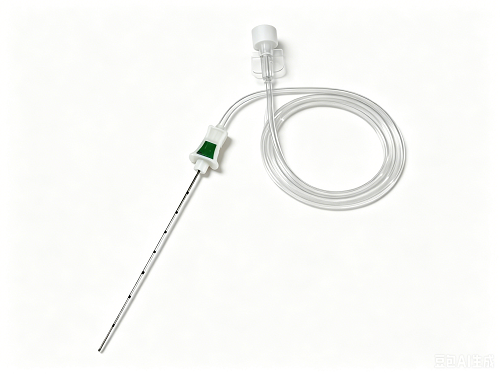
A nerve block needle is a specialized medical needle used to deliver local anesthetic or other medication near a targeted nerve or nerve plexus. Nerve block needles are commonly used for regional anesthesia and pain management, and many modern designs are optimized for ultrasound-guided procedures. Compared with conventional injection needles, ultrasound-guided nerve block needles may incorporate echogenic surface features to improve needle visibility during insertion.
Choosing the appropriate nerve block needle depends on several factors, including the target nerve, anatomical depth, needle length, gauge, needle tip design, ultrasound visibility, and procedure requirements.
This guide explains what a nerve block needle is, how it works, the different types available, and how healthcare professionals and medical device buyers can select an appropriate needle for ultrasound-guided nerve block procedures.
What Is a Nerve Block Needle?
A nerve block needle is a medical needle specifically designed to access an anatomical target near a nerve or nerve plexus and deliver medication for a nerve block procedure.
In regional anesthesia, the needle is advanced toward the intended target, often with the assistance of ultrasound imaging. Once the needle tip is positioned appropriately, the anesthetic solution can be delivered around the target nerve.
Unlike a standard injection needle, a nerve block needle used for ultrasound-guided procedures may be designed with features that improve visibility under ultrasound. This can help the clinician identify the needle shaft and, particularly, the needle tip during the procedure.
For ultrasound-guided regional anesthesia applications, ShineArk provides specialized Ultrasound-visible Puncture Needles for Nerve Block, designed around the requirements of ultrasound-guided procedures.
What Is a Nerve Block Needle Used For?
Nerve block needles can be used in procedures involving:
Peripheral nerve blocks
Regional anesthesia
Surgical anesthesia
Postoperative pain management
Acute pain management
Chronic pain procedures
Ultrasound-guided interventional procedures
The exact technique, medication, needle size, and approach depend on the specific procedure and clinical requirements.
How Does a Nerve Block Needle Work?
A typical ultrasound-guided nerve block procedure involves several stages. The exact technique varies according to the target nerve, block type, patient anatomy, and clinical protocol.
1. Identify the Target Nerve
Ultrasound imaging can be used to identify the target nerve or nerve plexus and surrounding anatomical structures.
The clinician evaluates the anatomy before advancing the needle and determines an appropriate access path.
2. Insert the Needle
The nerve block needle is introduced through the skin and advanced toward the target under appropriate clinical guidance.
When ultrasound is used, needle visibility becomes an important consideration because the clinician needs to monitor the needle during advancement.
3. Position the Needle Near the Target
The needle tip is positioned at the intended treatment location according to the selected nerve block technique.
Clear visualization of the needle tip is particularly important during ultrasound-guided procedures because the clinician needs to distinguish the tip from the surrounding anatomical structures.
4. Deliver the Medication
Once the needle is appropriately positioned, the medication can be delivered through the needle.
The needle and associated delivery system should provide controlled and reliable medication delivery appropriate for the procedure.
5. Monitor the Procedure
Ultrasound can be used to monitor needle position and the spread of the injected solution during the procedure.
The exact approach depends on the clinician, block technique, equipment, and clinical protocol.
What Does a Nerve Block Needle Look Like?
A nerve block needle generally consists of a needle shaft, needle tip, bevel, hub, and connection system. Some ultrasound-guided designs also incorporate an echogenic surface or other features intended to improve ultrasound reflection.
Main Components of a Nerve Block Needle
| Component | Function |
|---|---|
| Needle shaft | Provides controlled access toward the target |
| Needle tip | Allows accurate positioning near the target |
| Bevel | Supports controlled needle penetration |
| Hub | Connects the needle to the delivery system |
| Extension tube | Provides a connection for medication delivery when included |
| Echogenic surface | Helps enhance ultrasound visibility |
The exact configuration varies between needle models and manufacturers.
What Types of Nerve Block Needles Are Available?
Different nerve block procedures can require different needle designs. The most relevant categories include ultrasound-guided needles, echogenic needles, and nerve stimulation-compatible designs.
Ultrasound-Guided Nerve Block Needles
An ultrasound-guided nerve block needle is designed for procedures in which ultrasound imaging is used to guide needle positioning.
Because ultrasound guidance allows the clinician to visualize anatomical structures and the needle, needle visibility is an important design consideration.
An ultrasound-guided needle may therefore include surface characteristics designed to enhance the reflection of ultrasound waves.
Echogenic Nerve Block Needles
An echogenic nerve block needle is designed to provide enhanced visibility under ultrasound.
The needle surface can incorporate engineered features that increase ultrasound reflection. This can help make the needle easier to identify against surrounding tissue during an ultrasound-guided procedure.
Echogenicity can be influenced by:
Needle surface geometry
Reflective structures
Needle angle
Ultrasound frequency
Needle orientation
Tissue characteristics
Therefore, echogenic design is one factor to consider when selecting a needle for ultrasound-guided regional anesthesia.
Stimulating Nerve Block Needles
Some nerve block procedures may use nerve stimulation technology in addition to or instead of ultrasound guidance.
Stimulating needles are designed to work with compatible nerve stimulation equipment. The appropriate needle technology depends on the procedure and clinical protocol.
Why Is Ultrasound Visibility Important in a Nerve Block Needle?
Ultrasound visibility is an important consideration when selecting a needle for ultrasound-guided nerve blocks.
During a guided procedure, the clinician needs to identify the needle as it advances through tissue and determine the position of the needle tip relative to the target anatomy.
Better Needle Tip Visualization
The needle tip is particularly important because the clinician needs to know where the needle is positioned.
A needle with enhanced ultrasound visibility can make the shaft and tip easier to identify on the ultrasound image.
Improved Visibility at Different Angles
Needle visibility can change depending on the angle between the needle and the ultrasound beam.
An echogenic needle design can be developed to improve ultrasound reflection and support visibility across different insertion conditions.
Supports Ultrasound-Guided Procedures
A clearly visible needle can help the clinician monitor needle advancement and positioning during an ultrasound-guided procedure.
For this reason, ultrasound-visible nerve block needles are an important product category for regional anesthesia applications.
What Gauge Is Used for a Nerve Block Needle?
Nerve block needles are available in different gauges. Common options can include 20G, 21G, 22G, 23G, 24G, and 25G, depending on the product design.
There is no single gauge that is appropriate for every nerve block procedure.
| Gauge | General Consideration |
|---|---|
| 20G | Larger needle diameter and increased rigidity |
| 21G | Balance between diameter and needle strength |
| 22G | Common option for many regional anesthesia applications |
| 23G | Smaller diameter option |
| 24G | Fine needle option for selected applications |
| 25G | Smaller diameter option for selected procedures |
The appropriate gauge depends on the procedure, target anatomy, needle length, medication delivery requirements, clinician preference, and applicable clinical protocols.
When selecting a nerve block needle gauge, buyers should consider the complete needle specification rather than gauge alone.
How Long Is a Nerve Block Needle?
The required length of a nerve block needle depends primarily on the depth and location of the target.
Shorter needles may be appropriate for relatively shallow targets, while longer needles may be required when the target is located deeper within the anatomy.
Typical product configurations can include different lengths such as:
50 mm
80 mm
100 mm
120 mm
150 mm
Actual available lengths vary according to the needle model and gauge.
Factors That Determine Nerve Block Needle Length
When selecting nerve block needle length, consider:
Target anatomical depth
Patient anatomy
Selected block approach
Required needle control
Ultrasound visualization
Procedure requirements
The needle should provide sufficient working length to reach the intended target while maintaining appropriate handling and control.
What Are Nerve Block Needles Made Of?
Medical needles are generally manufactured from materials selected for strength, consistency, corrosion resistance, and compatibility with medical applications.
Medical-Grade Stainless Steel
Stainless steel is widely used for medical needle shafts because it can provide the mechanical properties needed for controlled insertion.
Selected ShineArk nerve block needle configurations use 304 medical stainless steel for the needle body.
Needle Surface Design
For ultrasound-guided applications, the needle surface can be engineered to improve ultrasound reflection.
An echogenic surface may use precisely designed surface structures to increase acoustic reflection and improve visualization.
Extension Tube Materials
Some nerve block needle configurations include an extension tube to connect the needle with the medication delivery system.
The material and configuration of the extension tube depend on the product specification.
What Is the Difference Between a Nerve Block Needle and a Regular Needle?
A nerve block needle is specifically designed around the requirements of regional anesthesia and nerve block procedures.
A conventional injection or puncture needle may be suitable for other medical applications but may not provide the same ultrasound visibility or design characteristics required for ultrasound-guided nerve blocks.
| Feature | Nerve Block Needle | Regular Injection/Puncture Needle |
|---|---|---|
| Primary application | Regional anesthesia and nerve blocks | General injection or puncture |
| Ultrasound visibility | Often optimized for guided procedures | Depends on product |
| Needle tip visualization | Important for guided positioning | Application dependent |
| Gauge options | Multiple options | Multiple options |
| Length options | Selected according to target depth | Depends on application |
| Echogenic design | Available in specialized models | Not always included |
| Application design | Focused on nerve block procedures | General-purpose or application-specific |
The key difference is not simply the needle's size. A nerve block needle is designed around the specific requirements of accessing a nerve-related target, particularly when ultrasound guidance is used.
What Nerve Blocks Can Be Performed With a Nerve Block Needle?
Nerve block needles can be used for different peripheral nerve block and regional anesthesia applications.
Brachial Plexus Block
Brachial plexus blocks target nerves associated with the upper extremity. Needle length and ultrasound visibility should be considered according to the selected approach and patient anatomy.
Femoral Nerve Block
A femoral nerve block targets the femoral nerve and can be performed using ultrasound guidance. Needle specifications depend on the anatomical depth and technique.
Sciatic Nerve Block
The sciatic nerve can be approached at different anatomical locations. Deeper approaches may require longer needles.
Interscalene Block
An interscalene block targets the brachial plexus in the neck region. Clear ultrasound visualization can be an important consideration when selecting a needle.
Adductor Canal Block
An adductor canal block targets structures in the thigh. The required needle length depends on anatomy and the selected ultrasound-guided approach.
Popliteal Nerve Block
A popliteal approach can be used to target the sciatic nerve branches around the popliteal region. Needle length and visibility should be selected according to the target depth.
The appropriate needle should always be selected based on the specific procedure, clinical requirements, patient anatomy, and applicable protocols.
How to Choose the Right Nerve Block Needle?
Selecting a nerve block needle can be simplified into five key considerations:
1. Identify the Target
First determine the target nerve, nerve plexus, or anatomical location.
Different procedures require different approaches and access depths.
2. Estimate the Target Depth
Consider the distance between the skin and the intended target.
Ultrasound imaging can help evaluate the target depth before needle selection and insertion.
3. Select the Needle Length
Choose a needle length that provides sufficient working distance for the intended approach.
For deeper targets, a longer needle may be required.
4. Select the Needle Gauge
Select the gauge according to the procedure and medication delivery requirements.
A range such as 20G–25G can provide flexibility for different applications.
5. Consider Ultrasound Visibility
For ultrasound-guided nerve blocks, consider:
Needle shaft visibility
Needle tip visibility
Echogenic surface design
Visibility at different insertion angles
Compatibility with the intended ultrasound-guided technique
A simple selection process can therefore be summarized as:
Target → Depth → Length → Gauge → Ultrasound Visibility
What Features Should a High-Quality Nerve Block Needle Have?
When evaluating a nerve block needle supplier, buyers should look beyond basic needle dimensions and consider the complete product design.
Enhanced Ultrasound Visibility
For ultrasound-guided procedures, enhanced echogenicity can support needle identification during insertion.
Clear Needle Tip Identification
The needle tip is a critical part of ultrasound-guided needle positioning. A suitable design should support clear identification of the tip under the intended imaging conditions.
Appropriate Gauge and Length Options
A supplier offering multiple gauge and length combinations can provide greater flexibility for different clinical applications.
Consistent Needle Geometry
Consistent manufacturing helps maintain predictable needle dimensions and handling characteristics.
Reliable Bevel Design
The bevel geometry influences needle penetration and handling. A controlled bevel design is therefore an important consideration.
Secure Connection and Extension Tube
Where an extension tube is included, the connection should be designed for reliable medication delivery and appropriate handling.
Controlled Manufacturing
Medical device buyers should also evaluate the supplier's manufacturing environment, quality management system, inspection procedures, packaging, sterilization process, and applicable regulatory documentation.
For broader ultrasound-guided puncture and interventional applications, ShineArk also provides Disposable Ultrasound-guided Puncture Needles.
Why Choose ShineArk for Ultrasound-Visible Nerve Block Needles?
ShineArk Medical develops medical needle products for ultrasound-guided and interventional applications, including specialized ultrasound-visible nerve block needles.
For dedicated nerve block applications, explore ShineArk's Ultrasound-visible Puncture Needles for Nerve Block.
The ShineArk nerve block needle range can be configured around different procedural requirements.
Key product considerations include:
Multiple gauge options
Multiple needle length options
Ultrasound-visible needle design
Echogenic surface features
Bilateral back bevel design
Medical stainless steel needle body
Extension tube configurations
Controlled manufacturing environment
OEM and ODM support
Custom packaging and private-label solutions
For buyers evaluating a nerve block needle supplier, product specifications, quality management, customization capabilities, production consistency, and technical support should all be considered together.
How to Choose a Nerve Block Needle Manufacturer?
When sourcing nerve block needles for hospitals, distributors, medical device companies, or OEM projects, buyers should evaluate several factors.
Product Specifications
Check whether the supplier can provide the required:
Gauge
Length
Needle tip design
Bevel configuration
Extension tube
Echogenic characteristics
Packaging format
Ultrasound Visibility Technology
If the product will be used for ultrasound-guided procedures, ask the supplier how the needle is designed to enhance ultrasound visibility.
Quality Management
Evaluate the supplier's quality management system and manufacturing controls.
For medical device procurement, documentation and regulatory requirements should be confirmed according to the destination market and intended application.
OEM and ODM Capability
For distributors and medical device brands, OEM/ODM capability can be important.
Potential customization areas include:
Product configuration
Private labeling
Packaging
Product identification
Bulk procurement requirements
Sample Evaluation
Before placing a large order, buyers can request product samples for evaluation according to their internal purchasing and validation procedures.
Nerve Block Needle Selection Guide
The following table provides a simple framework for evaluating a nerve block needle:
| Requirement | What to Consider |
|---|---|
| Target location | Anatomical position of the target |
| Target depth | Determines appropriate needle length |
| Procedure | Determines the required needle configuration |
| Needle length | Select according to target depth and approach |
| Needle gauge | Select according to procedure and delivery requirements |
| Ultrasound guidance | Consider an ultrasound-visible or echogenic design |
| Needle tip | Consider visibility and positioning |
| Supplier | Evaluate quality, specifications, production and support |
| OEM project | Confirm customization and packaging capabilities |
This approach allows buyers to evaluate the needle as a complete medical device rather than selecting a product based on gauge or length alone.
Frequently Asked Questions About Nerve Block Needles
What is a nerve block needle?
A nerve block needle is a specialized medical needle used to deliver medication near a targeted nerve or nerve plexus, commonly for regional anesthesia and pain management.
What is a nerve block needle used for?
It is used for nerve block procedures, including peripheral nerve blocks and other regional anesthesia applications. Many procedures can be performed using ultrasound guidance.
What gauge needle is used for a nerve block?
Nerve block needles are available in different gauges, commonly including 20G to 25G depending on the product. The appropriate gauge depends on the procedure, anatomy, medication delivery requirements, and clinician preference.
How long is a nerve block needle?
Nerve block needle lengths vary according to the application. Common configurations can include approximately 50 mm to 150 mm, although available lengths depend on the product model.
What is an echogenic nerve block needle?
An echogenic nerve block needle is designed with surface characteristics that enhance ultrasound reflection and help improve needle visibility during ultrasound-guided procedures.
Why are nerve block needles visible under ultrasound?
Ultrasound-visible or echogenic nerve block needles are designed to reflect ultrasound waves more effectively. Their visibility can also depend on the needle angle, ultrasound settings, needle design, and surrounding tissue.
What is the difference between a nerve block needle and a regular needle?
A nerve block needle is designed specifically for nerve block and regional anesthesia applications. Ultrasound-guided models may also incorporate features intended to improve needle and tip visibility.
How do I choose the right nerve block needle?
Consider the target, anatomical depth, needle length, gauge, needle tip design, ultrasound visibility, and procedure requirements. For procurement, also evaluate the supplier's quality system and customization capabilities.
Can nerve block needles be customized?
Depending on the supplier and product platform, customization may be available for specifications, labeling, packaging, and OEM/ODM requirements. Buyers should confirm the available options with the supplier.
What should I look for in a nerve block needle supplier?
Look for a supplier that can provide consistent product specifications, appropriate gauge and length options, ultrasound-visible designs, quality management controls, documentation, samples, and OEM/ODM support where required.
Conclusion
A nerve block needle is a specialized medical needle designed to deliver medication near a targeted nerve or nerve plexus, often as part of a regional anesthesia or pain management procedure. For ultrasound-guided applications, needle visibility and tip identification are important considerations.
When selecting a nerve block needle, buyers should evaluate the target, depth, length, gauge, needle tip, ultrasound visibility, materials, manufacturing quality, and supplier capabilities.
For medical device distributors, healthcare organizations, and OEM/ODM customers looking for ultrasound-visible nerve block needles, ShineArk's nerve block needle products provide multiple configurations for different procurement requirements.
```
Please Contact Us!
Recent News
1.Top 5 Ultrasound Nerve Block Needles for 2026
2026-09-042.What Size Needle Is Typically Used for Peripheral Nerve Blocks? A Complete Guide to Gauge and Length Selection
2026-09-033.What Is an Ultrasound Needle for Regional Anesthesia and Biopsy
2026-08-194.What is an echogenic needle nerve block used for?A Practical Guide for Anesthesiolog
2026-08-315.What kind of needle is used for a nerve block?
2026-08-07