



Peripheral Nerve Block Needle Innovations and Market Trends in 2026
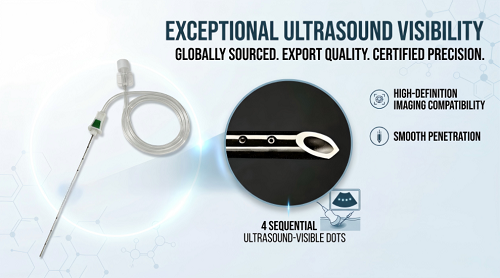
Peripheral nerve block needle innovations push regional anesthesia ahead. Peripheral nerve blocks now focus on patient comfort and safety. This nerve block method lowers risks and pain. Doctors use advanced nerve block needles for exact control. These nerve block needles work dependably. Better needle designs lead to improved patient results. ShineArk Medical is a leader in this change.
Key Takeaways
New echogenic needles show clear ultrasound images. This clear view cuts down procedure time and makes the procedure safer.
New needle tips and tough materials cause less harm to body tissue. People have less soreness after their operation.
Regional anesthesia is becoming more popular. It gives faster recovery and fewer side effects than general anesthesia.
North America and Europe are the top users of this technology. The Asia-Pacific area is growing quickly and has a lot of potential.
Use needles that have regulatory certifications. This ensures quality and helps with market access.
Key Innovations in Peripheral Nerve Block Needle Technology
Enhanced Echogenicity for Superior Ultrasound Visibility
You see a major shift toward echogenic needles in regional anesthesia. Poor needle visualization remains a common challenge during ultrasound-guided nerve blocks. When you cannot see the needle tip clearly, the risk of complications increases. Manufacturers now design needles with special reflective surfaces to solve this problem.
Echogenic needles use specialized patterns to enhance visibility. The Ultraplex 360 needle uses a 360° X-pattern for enhanced ultrasound visibility. PAJUNK incorporates patented Cornerstone Reflectors in its echogenic needles. These designs all aim to improve tip identification and reduce procedure time. You benefit from better visualization and greater confidence during nerve block procedures.
Enhanced echogenicity improves safety. When you see the needle clearly, you can avoid accidental nerve damage. You can also reduce the amount of anesthetic needed. This leads to better patient outcomes and fewer complications. The technology represents a significant step forward in regional anesthesia. Better visibility reduces the time needed to perform each block. This efficiency benefits both you and your patient.
Advanced Tip Designs and Material Science
You also see important advances in tip design and material science. The tip of a peripheral nerve block needle plays a critical role in tissue interaction. A poorly designed tip can cause unnecessary tissue trauma. Needle tip designs are engineered to allow smooth tissue navigation. You experience less resistance during insertion. The needle moves through tissue with precision and control. This reduces the risk of tissue damage and improves maneuverability.
Material selection affects performance and safety. Nerve block needles are often constructed from 304 medical-grade stainless steel. The table below shows the key properties of 304 stainless steel:
Property | Rating |
|---|---|
Corrosion Resistance | Good |
Strength | Moderate |
Biocompatibility | High |
These properties make 304 stainless steel suitable for general-purpose disposable needles. You get a reliable tool that performs consistently.
Nerve block needle size selection matters for different procedures. Needles are available in various sizes to match the clinical need. A shorter needle works well for superficial blocks. A longer needle reaches deeper targets. Proper needle size selection improves success rates and reduces patient discomfort.
These innovations are not just incremental improvements. They represent a significant leap in safety and efficacy. You get better visualization and smoother tissue navigation. The combination of advanced tip design and quality materials makes modern nerve block needles more reliable than ever. You can perform procedures with greater confidence and achieve better results for your patients. The focus on precision and safety directly improves your clinical outcomes.
Meeting Clinical Needs and Enhancing Patient Safety
How Innovations Address User Demands for Precision
You want tools that fit your skills. New nerve block needles are built to do just that. Depth markings on echogenic needles help you measure depth as you insert. You always know where you are without guessing. This matters when you aim for deep nerves. The 360° visibility lets you see the needle shaft from any angle. You can change your path without losing sight of the tip. Together, these features boost accuracy and speed.
Research backs these design choices. One study compared echogenic needles with regular ones. The results show clear gains for your workflow:
Outcome | Echogenic needle | Non-echogenic needle | Statistical significance |
|---|---|---|---|
Block procedure time | 4.8 min | 8.1 min | p < 0.05 |
Sensory block onset | 8.3 min | 11.0 min | p < 0.05 |
Motor block onset | 11.4 min | 14.7 min | p < 0.05 |
Patient satisfaction score | 4.5 (5-point scale) | 2.6 (5-point scale) | p < 0.05 |
Surgeon satisfaction score | 4.3 | 1.5 | p < 0.05 |
With better visibility, you cut procedure time nearly in half. Faster block onset means your patient moves into anesthesia smoothly. You spend less time fixing needle position. That saves time in busy schedules. The design meets your need for tools that are precise and simple. You feel sure each needle works the same way. Handling tough cases gets easier with reliable gear. The marks and 360° view solve real problems you face daily.
The Impact of Needle Choice on Patient Outcomes
The needle you pick affects how patients feel and heal. A needle that harms less tissue lowers pain after surgery. Needle tip designs that minimize tissue trauma slide through tissue smoothly. You cause less damage when inserting. That means less soreness for your patient later. Fewer issues arise when you use good tools.
Data shows strong benefits for comfort. Sensory block lasted 460.7 minutes with regular needles but 547.7 minutes with echogenic ones. Motor block went from 357.9 minutes to 452.1 minutes. Longer blocks keep patients pain-free for more time. They need less extra pain medicine. Patient satisfaction scores jumped from 2.6 to 4.5 out of 5. That jump shows how patients view their whole experience.
The study found no real difference in when patients first asked for pain relief between needle types. Recovery times looked similar no matter which needle you used. But the right after-surgery period improved a lot. Shorter procedures mean less time under ultrasound guidance. Your patient spends less time in the OR. That helps with faster turnover and better use of resources.
Patient safety is the core of needle design. Needles are built with patients in mind. The 304 medical-grade stainless steel offers good corrosion resistance and moderate strength, suitable for general-purpose needles. The TPU extension tube delivers injections safely. You lower nerve injury risk with clear views. Your patient gets the right dose of anesthetic in the right spot. That precision cuts complications and boosts satisfaction. Regional anesthesia becomes safer with proper tools. Your care shows in every needle you pick. The right gear leads to better results and builds your name as a skilled doctor.
Market Trends and Dynamics for 2026
Growth Drivers and the Expanding Role of Regional Anesthesia
Several factors push the peripheral nerve block needle market forward in 2026. You see a clear move toward regional anesthesia instead of general anesthesia. Patients heal faster and face fewer side effects. They skip the grogginess and nausea that often come with general anesthesia. This choice drives demand for better tools and methods.
Outpatient surgery growth plays a big part in this rise. Ambulatory Surgical Centers (ASCs) now hold the largest market share. You find more procedures shifting to these centers each year. Patients want to return home the same day. They want quicker recovery times. Peripheral nerve blocks make this happen. You can perform surgery with targeted anesthesia. The patient stays awake and at ease. They leave the facility sooner. This trend speeds up the use of continuous peripheral nerve block catheters. You see them used more often in orthopedic and trauma cases.
The increasing prevalence of chronic pain conditions also boosts market growth. People look for options beyond long-term opioid use. Nerve blocks offer an answer. You can give targeted relief without whole-body side effects. The growing preference for minimally invasive procedures supports this trend. Specialized orthopedic clinics keep opening. Each one needs dependable equipment. The need for quality nerve block needles rises with every new facility.
Regional Insights and the Competitive Landscape
You find strong adoption rates in North America and Europe. These regions lead in technology use. Hospitals there invest heavily in ultrasound guidance systems. Clinicians receive advanced training in regional anesthesia. The regulatory environment supports new ideas. Manufacturers compete hard for market share in these mature markets.
The Asia-Pacific region shows rapid growth potential. You see expanding healthcare infrastructure across this area. Rising incomes allow more patients to access advanced care. Medical tourism brings international patients to regional centers. These factors create major opportunities for manufacturers.
Future Outlook and Strategic Opportunities
Emerging Applications and Technological Convergence
Regional anesthesia now reaches beyond the operating room. Enhanced recovery after surgery (ERAS) protocols depend on this method. These protocols help patients leave the hospital sooner and heal faster. Chronic pain management also creates new uses for this technology. Patients with long-term pain want options besides opioids. You can deliver targeted relief with fewer side effects. The nerve block technique focuses on specific pain pathways. This method keeps patients comfortable without deep sedation. Outpatient clinics find new uses for this approach every day. Better needle design gives you more control during insertion.
Technology convergence pushes these tools further. Electrical stimulation devices now work with advanced nerve block needles. You receive real-time feedback about the needle tip location. AI-guided systems read ultrasound images automatically. These systems recommend the best insertion angles. This combination reduces differences between procedures. You get consistent results no matter who performs the block. Regional anesthesia becomes more precise with each new advance. Integrated platforms will bring all these features together. Your daily work becomes faster and more effective. Better needles cut the time needed for each procedure. Echogenic needles improve visibility during difficult blocks.
Navigating Regulatory and Reimbursement Landscapes
Regulatory standards shape which products you can choose. Compliance with regional regulations is necessary for market access. Manufacturers must prove their quality systems are strong. You need suppliers who know these rules well. Clear regulatory paths help regional anesthesia grow.
Reimbursement policies also affect how quickly new tools are adopted. Payers want proof of better outcomes. Nerve block needles that reduce complications are worth their cost. You can justify these tools by noting shorter procedure times. Safety improvements lower overall expenses. Anesthetic delivery becomes more precise. Managing regulatory requirements becomes simpler with expert help.
The market for peripheral nerve block needles is moving toward precision, safety, and efficiency. Better visibility and smarter tip designs are leading this change. These improvements are reshaping regional anesthesia around the world.
Clinicians can get ready by using new tools and keeping up with updates. Better needles help you improve patient comfort and reduce pain. Procurement teams should work with innovative companies. This teamwork ensures you get reliable nerve block needles that follow the rules.
These trends open up real chances for improvement. You can boost patient outcomes and operational results. The right nerve block needles make anesthesia delivery and management better. Your choice of equipment directly affects safety and comfort. Use these new ideas to improve your practice and patient care.
FAQ
How do you determine the correct nerve block needle size for each procedure?
Your nerve block needle size depends on how deep the target is. Patient anatomy matters too. Blocks near the surface need shorter needles. Deeper areas need longer ones. Needles are available in various sizes to match the clinical need. Match the gauge to tissue density.
What are the best practices for choosing nerve block needle size in regional anesthesia?
Start with the block site. Check the tissue thickness. Look at ultrasound images first. Pick a gauge that balances visibility and comfort. Thinner needles cause less harm but may bend. Your key evaluation points include the procedure type and depth. These best practices for choosing nerve block needle size help you succeed. Confirm the nerve block needle size before you start.
What potential complications related to needle size should you monitor?
A wrong nerve block needle size can cause nerve damage or failed blocks. A needle that is too short misses the target. A needle that is too long risks hitting nearby structures. Bigger gauges cause more tissue damage. Smaller needles may bend. These potential complications related to needle size affect patient results. Double-check your nerve block needle size before you begin.
What are the recommended nerve block needle sizes for common blocks?
The recommended nerve block needle sizes depend on the specific block. Clinicians should select based on the target depth and patient anatomy. Adjust based on what you see on ultrasound. Your needle size choice should follow your clinical judgment. Different procedures need different nerve block needle size options.
How do regulatory standards guide your nerve block needle choices?
Regulatory standards ensure quality and performance. When you pick needles, check for certifications. They guarantee the same performance every time. This matters for anesthesia management and pain management. Regional anesthesia depends on reliable equipment. Your nerve block needle size affects anesthesia precision. Regional anesthesia gets better when you choose the right nerve block needle size.